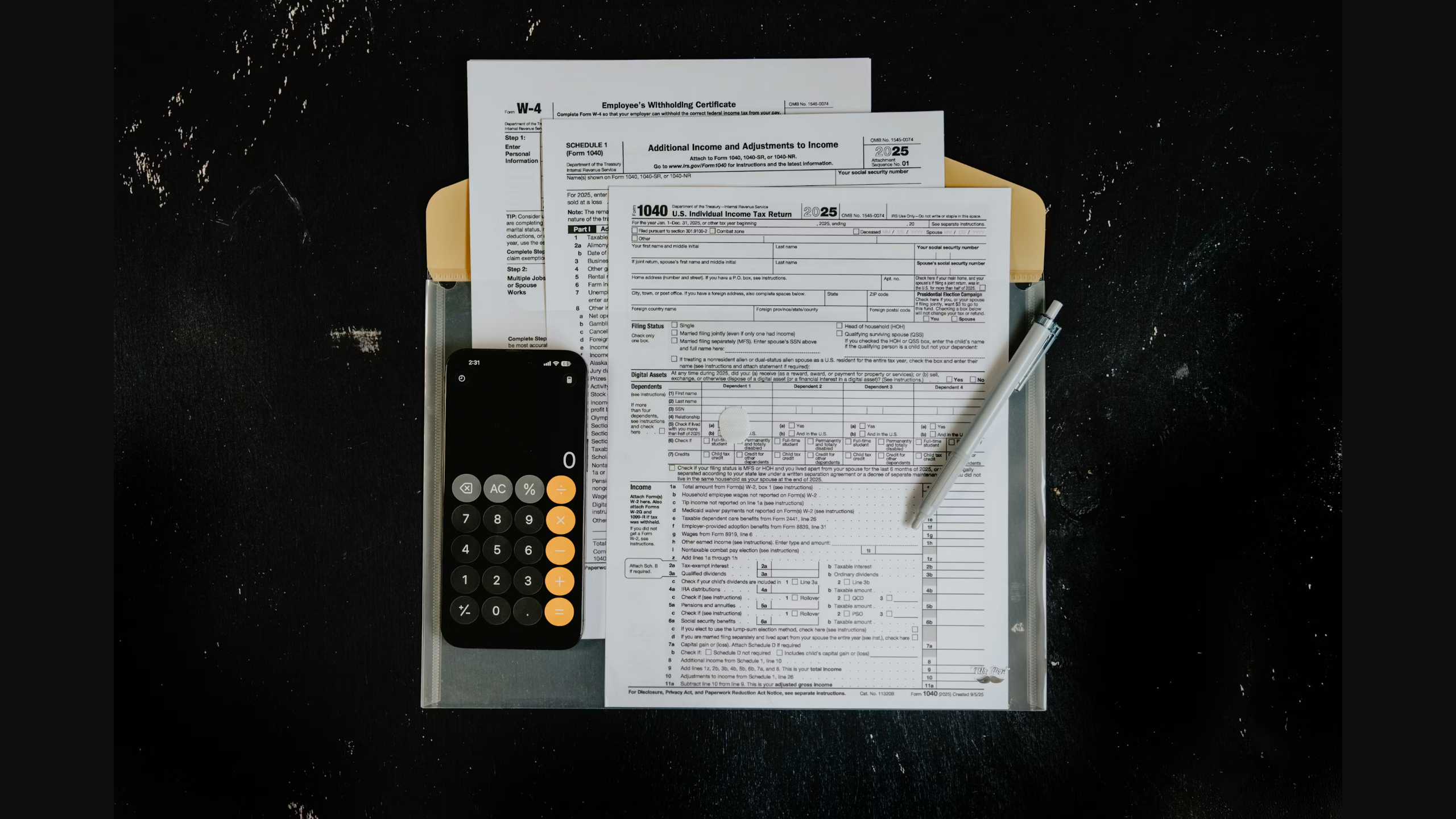
2026 Tax Law Changes: Complete Guide to New Deductions & Money-Saving Strategies
By MoneyMaster101 Editorial Team | Updated April 10, 2026
The 2026 tax year brings one of the most significant overhauls to the U.S. tax code in decades. Thanks to the One Big Beautiful Bill Act (OBBBA) signed into law on July 4, 2025, millions of Americans now have access to powerful new deductions and tax-saving opportunities that can substantially reduce their tax bills.
Whether you’re a tipped worker, senior citizen, overtime employee, or simply looking to maximize your standard deduction, understanding these changes is critical for keeping more of your hard-earned money. This comprehensive guide breaks down everything you need to know about the 2026 tax law changes, including exact dollar amounts, eligibility requirements, and proven strategies to minimize your tax liability legally.
What Changed: The One Big Beautiful Bill Act Overview
The One Big Beautiful Bill Act (Public Law 119-21) represents the largest batch of new individual tax deductions since the Tax Cuts and Jobs Act of 2017. For the 2026 tax year (returns filed in 2027), the legislation created seven new or enhanced deductions that work together to provide substantial tax relief across different taxpayer categories.
Here’s what makes the 2026 changes unique:
- Four new above-the-line deductions available whether you itemize or take the standard deduction
- Enhanced standard deduction amounts with inflation adjustments
- Higher SALT cap benefiting taxpayers in high-tax states
- New retirement savings vehicles including Trump Accounts for children
- Permanent provisions alongside temporary deductions (2025-2028)
According to the IRS official guidance, most taxpayers will see meaningful reductions in their taxable income if they understand and properly claim these new benefits.
The Big Four: New Above-the-Line Deductions for 2026
The headline changes for 2026 are four brand-new deductions that reduce your adjusted gross income (AGI) regardless of whether you itemize. These are claimed on the new Schedule 1-A (Additional Deductions) attached to Form 1040.
1. No Tax on Tips: Qualified Tips Deduction (Up to $25,000)
If you work in a tipped occupation, this deduction could be worth thousands. The qualified tips deduction lets eligible workers deduct up to $25,000 per year in tips from their taxable income.
Who Qualifies:
- Employees and self-employed workers in occupations that customarily received tips on or before December 31, 2024
- Qualifying occupations include: wait staff, bartenders, salon workers, personal trainers, gig economy workers, valets, bellhops, and many more
- You must not work in a specified service trade or business (SSTB)
- Married taxpayers must file jointly
- Valid Social Security Number required
Phase-Out Rules:
The deduction phases out for taxpayers with modified adjusted gross income (MAGI) over $150,000 ($300,000 for joint filers). The reduction is calculated as 6% of the amount exceeding the threshold.
Example:
Sarah, a waitress, earned $28,000 in tips in 2025. Her MAGI is $85,000. She can deduct the full $25,000 cap (not the full $28,000), reducing her taxable income significantly. If she’s in the 22% bracket, this saves her approximately $5,500 in federal taxes.
2. No Tax on Overtime: Qualified Overtime Deduction (Up to $12,500/$25,000)
Workers who receive overtime pay can now deduct the portion that exceeds their regular rate of pay—typically the “half” portion of “time-and-a-half” compensation required by the Fair Labor Standards Act.
Key Details:
- Maximum deduction: $12,500 for single filers, $25,000 for married filing jointly
- Must be reported on Form W-2, Form 1099, or other specified statement
- Available to both itemizing and non-itemizing taxpayers
- Same phase-out thresholds as tips deduction ($150,000/$300,000 MAGI)
Real-World Impact:
Mike, a factory worker, earned $18,000 in overtime pay during 2025. Of that amount, $9,000 represents the “half” portion of time-and-a-half pay. He can deduct the full $9,000 (under the $12,500 cap). At a 22% tax bracket, this saves him $1,980 in federal taxes.
3. No Tax on Car Loan Interest: Vehicle Loan Interest Deduction (Up to $10,000)
This deduction targets Americans who financed vehicle purchases, allowing them to deduct interest paid on qualifying auto loans.
Eligibility Requirements:
- Loan must be for a new vehicle originated after December 31, 2024
- Vehicle must be assembled in America
- Gross vehicle weight under 14,000 pounds
- For personal use vehicles only (not business)
- Maximum deduction: $10,000 per year
Phase-Out:
The deduction phases out starting at MAGI of $100,000 ($200,000 for joint filers), using the same 6% reduction formula.
Example:
Jennifer bought a new American-made SUV in January 2025 with a $35,000 loan at 6.5% interest. She paid $2,150 in interest during 2025. She can deduct the full $2,150, saving approximately $473 in taxes at the 22% bracket.
4. Senior Deduction: Additional $6,000 for Taxpayers 65+ (Up to $12,000 for Couples)
Seniors receive special treatment under the OBBBA with an additional deduction on top of the existing standard deduction for age.
Eligibility:
- Must be age 65 or older on or before the last day of the tax year
- $6,000 per eligible individual ($12,000 if both spouses qualify)
- Available to both itemizing and non-itemizing taxpayers
- Effective for tax years 2025 through 2028
Phase-Out Rules:
This deduction has lower income thresholds than the other new deductions:
- Phases out starting at MAGI of $75,000 (single) or $150,000 (joint)
- Fully phased out at $175,000 (single) or $250,000 (joint)
According to IRS Tax Tip 2026-14, this deduction is in addition to the existing additional standard deduction for seniors ($2,000 for single filers, $1,600 per spouse for married filers).
2026 Standard Deduction Amounts: Record Highs
The OBBBA made permanent the enhanced standard deduction amounts and added inflation adjustments for 2026. Most taxpayers will find the standard deduction more beneficial than itemizing.
2026 Standard Deduction by Filing Status:
| Filing Status | 2025 Amount | 2026 Amount | Increase |
|---|---|---|---|
| Single | $15,750 | $16,100 | +$350 |
| Married Filing Jointly | $31,500 | $32,200 | +$700 |
| Head of Household | $23,625 | $24,150 | +$525 |
| Married Filing Separately | $15,750 | $16,100 | +$350 |
For seniors 65+, the total potential standard deduction in 2026 could reach:
- Single senior: $16,100 (base) + $2,000 (age) + $6,000 (OBBBA) = $24,100
- Married seniors (both 65+): $32,200 (base) + $3,200 (age) + $12,000 (OBBBA) = $47,400
Enhanced SALT Deduction: relief for High-Tax States
The State and Local Tax (SALT) deduction cap increased dramatically under the OBBBA, providing significant relief for taxpayers in high-tax states like California, New York, and New Jersey.
SALT Cap Progression:
- 2025: $40,000
- 2026: $40,400 (indexed for inflation)
- Through 2029: Continues with annual 1% adjustments
This is a 4x increase from the previous $10,000 cap that had been in place since 2018. However, the full cap applies only to taxpayers with modified AGI under $500,000 ($250,000 for married filing separately), with phase-out beginning at $500,000 and complete phase-out at $600,000.
2026 Tax Brackets: Inflation Adjustments
The IRS adjusted all tax bracket thresholds upward by approximately 2.3% for 2026 to prevent bracket creep. The seven-bracket structure remains unchanged with rates from 10% to 37%.
2026 Tax Brackets for Single Filers:
- 10%: Up to $12,400
- 12%: $12,401 to $50,400
- 22%: $50,401 to $105,700
- 24%: $105,701 to $201,775
- 32%: $201,776 to $256,225
- 35%: $256,226 to $640,600
- 37%: Over $640,600
2026 Tax Brackets for Married Filing Jointly:
- 10%: Up to $24,800
- 12%: $24,801 to $100,800
- 22%: $100,801 to $211,400
- 24%: $211,401 to $403,550
- 32%: $403,551 to $512,450
- 35%: $512,451 to $768,700
- 37%: Over $768,700
As Investopedia reports, unless you receive a raise exceeding 2.3% in 2026, you won’t be taxed at a higher rate due to these adjustments.
Additional Tax Credits and Benefits for 2026
Beyond the major deductions, several other provisions provide tax relief in 2026:
Charitable Deduction for Non-Itemizers
Taxpayers who take the standard deduction can now deduct up to $1,000 ($2,000 for married filing jointly) in cash contributions to qualified charities. This reinstates and expands the COVID-era provision.
Qualifying Contributions:
- Cash gifts made by debit or credit card
- Checks and electronic bank transfers
- Online payment platform donations
- Payroll deductions
PMI Deduction Permanently Reinstated
Private Mortgage Insurance (PMI) premiums are once again deductible for itemizers, with no expiration date. The deduction phases out at AGI over $100,000.
Enhanced Retirement Savings Opportunities
Trump Accounts for Children:
Starting July 4, 2026, parents can establish “Trump Accounts” for children under 18:
- Annual contribution limit: $5,000
- Federal government provides one-time $1,000 contribution for eligible children (born 2025-2028)
- Tax-deferred growth until age 18
- After 18, treated as traditional IRA
- Employers can contribute up to $2,500 annually (non-taxable to employee)
401(k) and IRA Limits for 2026:
- 401(k) contribution limit: $24,500 (up from $23,000)
- Catch-up (age 50+): $8,000
- Super catch-up (ages 60-63): $11,250 (total possible: $35,750)
- IRA contribution limit: $7,500 (up from $7,000)
- IRA catch-up (age 50+): $1,100
Top 7 Tax Planning Strategies for 2026
Maximizing your tax benefits requires strategic planning. Here are the most effective approaches for 2026:
1. Stack Above-the-Line Deductions
If you qualify for multiple new deductions (tips, overtime, car loan interest, senior), claim all of them on Schedule 1-A. These deductions work together and can substantially reduce your AGI before calculating taxable income.
2. Bunch Charitable Contributions
With the new 0.5% AGI floor for itemized charitable deductions starting in 2026, consider bunching two years of donations into one year to exceed the threshold and maximize your deduction.
3. Maximize Retirement Contributions Early
Contributing to traditional 401(k)s and IRAs reduces your current taxable income. For 2026, every dollar contributed to a traditional retirement account effectively costs you only 70-78 cents after tax savings (depending on your bracket).
4. Consider Roth Conversions Strategically
Use the expanded tax brackets to convert traditional IRA funds to Roth IRAs while filling lower brackets (12% or 22%). This creates tax-free income pools for retirement and helps manage future Required Minimum Distributions (RMDs).
5. Leverage Health Savings Accounts (HSAs)
HSAs offer triple tax advantages: tax-deductible contributions, tax-free growth, and tax-free withdrawals for medical expenses. For 2026:
- Self-only coverage limit: $4,150
- Family coverage limit: $8,300
- Catch-up (age 55+): $1,000
6. Time Income and Deductions
If you’re close to a deduction phase-out threshold, consider deferring income to the following year or accelerating deductible expenses into the current year to maximize benefits.
7. Review Withholding After Mid-Year Law Changes
Since the OBBBA was signed mid-2025, many employers haven’t adjusted withholding tables. Use the updated IRS Tax Withholding Estimator to avoid surprises at filing time.
Common Mistakes to Avoid
Even well-intentioned taxpayers make costly errors. Watch out for these pitfalls:
- Missing documentation: Keep records of tip income, overtime pay, car loan interest statements, and age verification for senior deductions
- Ignoring phase-out calculations: Each deduction has different phase-out thresholds—know where you stand
- Forgetting Schedule 1-A: The four temporary deductions require this new form; don’t skip it
- Overlooking HSA eligibility: Bronze and catastrophic health plans are now HSA-compatible starting 2026
- Delaying retirement contributions: Contribute early in the year to maximize tax-deferred growth
Frequently Asked Questions (FAQ)
Q1: Can I claim both the standard deduction and the new above-the-line deductions?
Yes! That’s the key benefit of the tips, overtime, car loan interest, and senior deductions—they’re “above-the-line,” meaning you can claim them even if you take the standard deduction. They’re reported on Schedule 1-A and reduce your AGI before you choose between standard or itemized deductions.
Q2: I’m 64 years old. Do I qualify for the senior deduction?
No. You must be age 65 or older on or before December 31, 2026 (the last day of the tax year). If you turn 65 on January 1, 2027, you don’t qualify for the 2026 tax year. However, you can claim the additional standard deduction for age if you’re 65+ by year-end under existing law.
Q3: What occupations qualify for the tips deduction?
The IRS maintains a list of occupations that “customarily and regularly” received tips before December 31, 2024. Common examples include: restaurant servers, bartenders, baristas, hotel bellhops, valets, salon/barber staff, spa workers, personal trainers, tour guides, casino dealers, and gig economy workers in service roles. Check the IRS OBBBA provisions page for the complete list.
Q4: Does the car loan interest deduction apply to used vehicles?
No. The deduction only applies to new vehicles purchased with loans originated after December 31, 2024. The vehicle must also be assembled in America and have a gross weight under 14,000 pounds. Leased vehicles don’t qualify—only financed purchases.
Q5: I make $160,000 as a single filer. Will I get any of the new deductions?
Your deductions will be reduced or eliminated depending on which one:
- Tips/Overtime: Partially reduced (phase-out starts at $150,000)
- Car loan interest: Fully phased out (phase-out complete at $166,667)
- Senior deduction: Fully phased out (phase-out complete at $175,000, but starts at $75,000)
At $160,000 MAGI, you’d receive a reduced tips/overtime deduction but likely no car loan interest or senior deduction benefit.
Q6: Are the new deductions permanent?
No, most are temporary. The tips, overtime, car loan interest, and senior deductions apply only to tax years 2025 through 2028. The SALT cap increase lasts through 2029. However, the charitable deduction for non-itemizers and PMI deduction reinstatement are permanent provisions with no expiration date.
Q7: How do I report these deductions on my tax return?
The four temporary deductions (tips, overtime, car loan interest, senior) are reported on the new Schedule 1-A (Additional Deductions), which attaches to your Form 1040. The IRS released this form specifically for the OBBBA provisions. Tax software will automatically include it when you enter qualifying amounts.
Q8: Can I contribute to a Trump Account for my 17-year-old?
Yes, starting July 4, 2026. Any U.S. citizen child under 18 with a valid SSN is eligible. However, the one-time $1,000 federal contribution is only available for children born between January 1, 2025, and December 31, 2028, whose parents enroll in the pilot program. You can contribute up to $5,000 annually regardless of birth year.
Q9: I live in California with high state taxes. Does the SALT cap increase help me?
Potentially, yes. If you itemize deductions and your state and local taxes exceed $10,000 (which is common in California), the increased $40,400 cap for 2026 could provide substantial additional deduction value. However, the benefit phases out if your MAGI exceeds $500,000, and remember that SALT deductions aren’t allowed for Alternative Minimum Tax (AMT) calculations.
Q10: Should I itemize or take the standard deduction in 2026?
For most taxpayers, the standard deduction remains more beneficial in 2026. With the base standard deduction at $32,200 for married couples (plus potential senior additions), you’d need itemizable expenses exceeding that amount to benefit from itemizing. However, if you live in a high-tax state with large mortgage interest and can now deduct up to $40,400 in SALT taxes, itemizing might make sense. Run both scenarios using tax software or consult a tax professional.
Conclusion: Take Action Now
The 2026 tax law changes represent a generational opportunity to reduce your tax burden legally and strategically. The One Big Beautiful Bill Act created multiple pathways to lower your taxable income, whether you’re a working professional, senior citizen, parent, or business owner.
Your Action Steps:
- Review your eligibility for all four above-the-line deductions (tips, overtime, car loan interest, senior)
- Track documentation throughout 2026: tip records, overtime pay stubs, car loan statements, age verification
- Update your withholding using the IRS Tax Withholding Estimator to reflect new deductions
- Maximize retirement contributions early in the year to reduce current taxable income
- Consider meeting with a tax professional if you have complex situations or are near phase-out thresholds
Remember, these temporary deductions expire after 2028 (except the senior deduction which ends after 2028, and SALT which continues through 2029). Make the most of them while they last. By understanding and properly claiming these benefits, you could save thousands of dollars on your 2026 tax return.
Resources:
- IRS One Big Beautiful Bill Provisions Page
- IRS Tax Tip 2026-12: New and Enhanced Deductions
- IRS Revenue Procedure 2025-32: 2026 Inflation Adjustments
- IRS Tax Withholding Estimator
Disclaimer: This article is for informational purposes only and does not constitute tax advice. Tax laws are complex and subject to change. Consult with a qualified tax professional for advice specific to your situation.