Groceries are one of the few budget categories that can feel unpredictable every single week. Prices move, schedules get busy, and a quick stop for “just a few things” becomes a cart full of food that does not quite turn into meals. The good news is that lowering your grocery bill does not require extreme couponing, a pantry full of unfamiliar bargain items, or eating the same meal forever. It requires a system that makes your normal decisions a little more deliberate.
This guide focuses on repeatable habits: deciding what to buy before you enter the store, using what you already own, choosing lower-cost substitutes without sacrificing nutrition, and making a plan for the food most likely to be wasted. A small improvement in each step can make a meaningful difference over a month while still leaving room for convenience and foods you enjoy.
Start With a Grocery Number You Can Actually Use
Before changing what you buy, look at what you currently spend. Add the last four weeks of grocery receipts, delivery orders, warehouse-store purchases, and quick convenience-store stops. Keep restaurant meals separate. Divide the grocery total by four to get a practical weekly starting point. This is not a judgment exercise; it is the baseline that tells you whether a new habit is working.
Next, choose one modest target. Cutting a $180 weekly bill to $120 overnight is likely to create frustration and rebound spending. A target such as $15 to $25 less per week is easier to test. That amount can come from one avoided delivery fee, two fewer impulse items, or a better plan for leftovers. As you build consistency, decide whether the saved money should stay in checking, pay down debt, or move automatically into savings. Our guide to saving money with strategies that actually work can help you give those savings a specific job.
Use a simple three-part budget for the trip: essentials, flexible items, and treats. Essentials are the ingredients and staples needed for planned meals. Flexible items are substitutes if a sale or season makes one option attractive. Treats are intentional extras. Giving treats a small lane in the budget prevents the all-or-nothing feeling that makes a plan hard to keep.
Plan Meals Around Your Real Week, Not Your Ideal Week
A meal plan fails when it assumes every evening will be calm and productive. Start with your calendar instead. Mark late work nights, activities, travel, and the day you normally run out of energy. Assign the easiest meals to the busiest nights: eggs and toast, pasta with frozen vegetables, soup and sandwiches, or a planned leftovers night. Save the recipe with more preparation for the night you genuinely have time.
Choose three to five dinner anchors rather than planning every bite for seven days. An anchor is a flexible base such as tacos, a grain bowl, a sheet-pan dinner, a soup, or a stir-fry. Buy ingredients that can move between anchors. Roasted chicken can become tacos, a salad topping, or soup. A bag of spinach can work in eggs, pasta, or a grain bowl. This overlap is where meal planning saves money: fewer specialty ingredients are purchased for one recipe and then forgotten.
Make the plan visible. A note on the refrigerator, a phone note shared with a partner, or a small whiteboard is enough. Include the order in which perishable foods should be used. Tender greens, berries, fish, and fresh herbs go first; carrots, cabbage, apples, frozen foods, and pantry staples can wait. Planning the order protects the food you already paid for.
Take Inventory Before You Shop
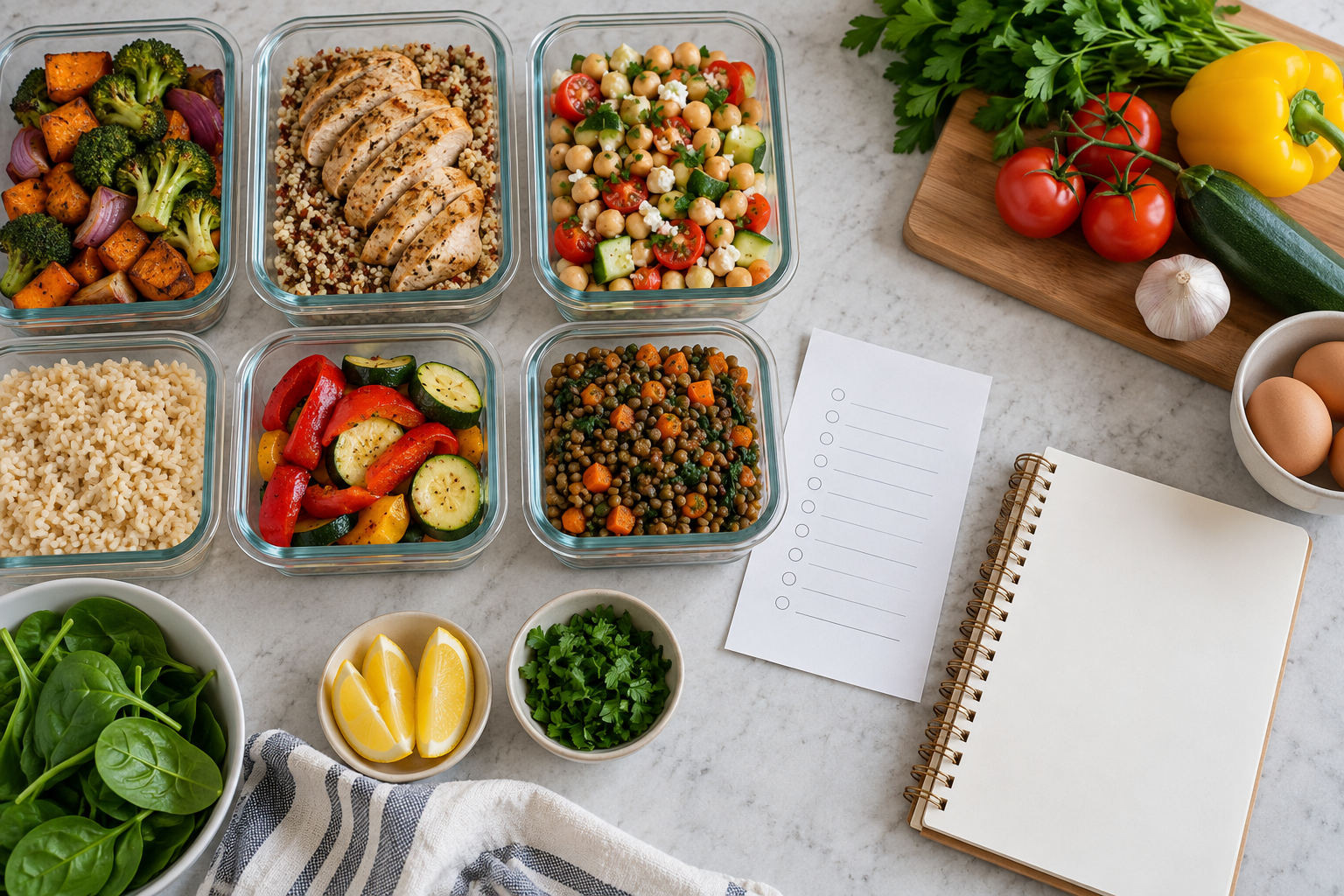
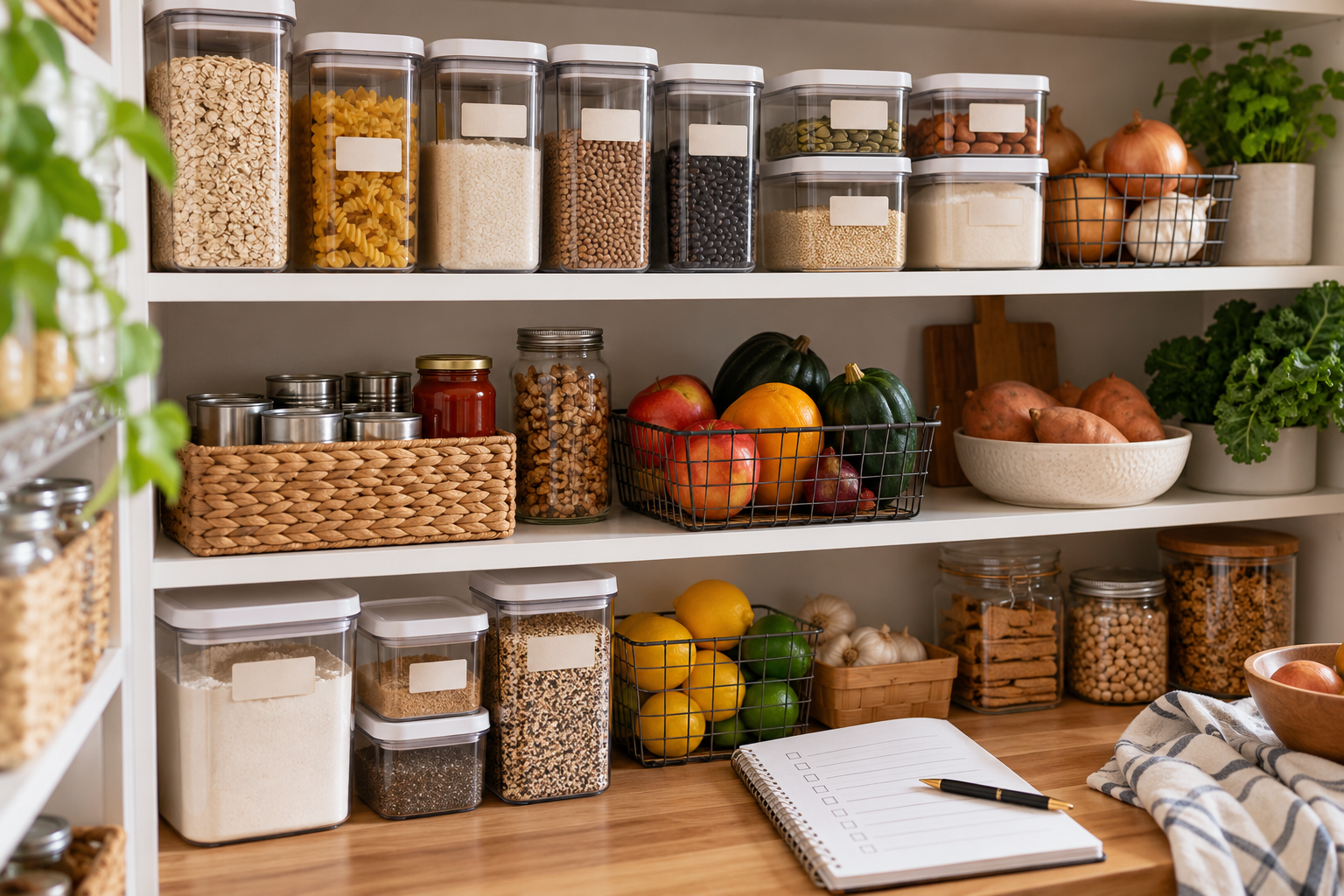
The lowest-cost grocery item is often the one you already own. Spend five minutes checking the refrigerator, freezer, and pantry before making a list. You are looking for ingredients that need a home, not trying to create a perfect inventory system. Check opened packages, produce drawers, leftovers, and freezer bags with only one serving left.
Write those items at the top of the list and build meals around them. Half a bag of rice, canned beans, frozen broccoli, and salsa can become a bowl night. A package of tortillas, cheese, and vegetables can become quesadillas. A nearly full jar of pasta sauce can become a quick dinner with beans or sausage. This approach reduces waste while making the list shorter.
Keep a running “use first” bin or shelf at eye level. It can hold yogurt near its date, a partial bag of spinach, opened crackers, or leftovers. When you need a snack or a quick lunch, look there before opening something new. The U.S. Department of Agriculture explains that food-date labels are generally about quality rather than a universal safety deadline, so learn the meaning of labels and use your senses along with proper storage guidance instead of discarding food automatically.
Build a List That Prevents Expensive Decisions
A list is not about restriction; it is a decision made when you are not hungry, rushed, or distracted by a display. Group it by department: produce, protein, dairy, pantry, frozen, and household. Add quantities, not just item names. “Three bananas” is more useful than “bananas” when your goal is to avoid waste.
For each item, note whether it is a must-buy or a substitute is acceptable. If chicken is expensive, perhaps beans, eggs, tofu, canned tuna, or a different cut works in the meal. If berries are high, apples, oranges, frozen fruit, or a sale fruit can fill the same role. Flexibility protects your plan without turning the trip into a scavenger hunt.
Do not shop hungry when you can avoid it. A small snack before the store can reduce the appeal of convenience foods and oversized packages. Also set a time limit. Wandering every aisle is an invitation for unplanned spending. If a store app or paper flyer shows a genuinely useful sale, add it only after asking: would I have bought this anyway, and can I use it before it spoils?
Compare Unit Prices, Not Package Prices
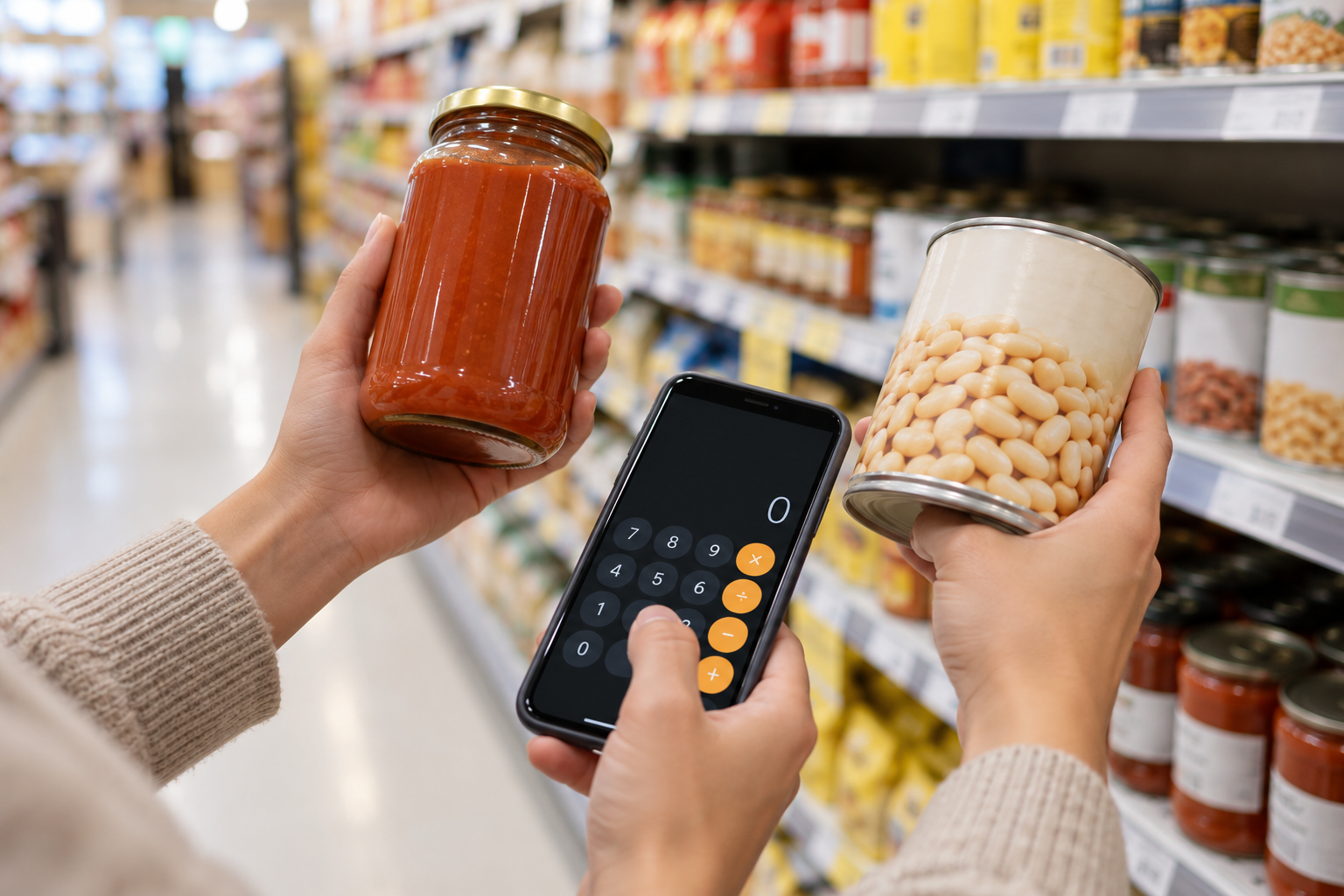
The sticker price is not always the real comparison. Unit pricing shows the cost per ounce, pound, or other common measure. The bigger package is only a deal if you can use and store it. A bulk bag of snack food that goes stale, a giant container of produce that spoils, or an unfamiliar sauce bought because it looked inexpensive is not a bargain.
When two versions of a staple are available, compare their unit prices first and then consider your household’s use. Store brands often provide comparable basics for less, especially for canned vegetables, beans, pasta, flour, oats, frozen fruit, spices, and dairy. Test one or two categories rather than changing everything at once. Keep the version your household will actually eat.
Be alert to convenience premiums. Pre-cut fruit, grated cheese, single-serving snacks, and prepared sauces may be worthwhile on an unusually busy week, but they should be conscious tradeoffs. Buy one or two convenience items when they prevent takeout or food waste; do not let them quietly become the default for the entire cart.
Use Low-Cost Proteins and Produce Strategically
Protein does not have to mean the most expensive meat in the case. Eggs, beans, lentils, tofu, canned fish, yogurt, peanut butter, and chicken thighs can stretch a food budget while supporting satisfying meals. Try a few plant-forward meals rather than treating them as a sacrifice: lentil soup, black-bean tacos, chickpea curry, bean-and-rice bowls, or pasta with white beans and vegetables. Combining a smaller amount of meat with beans, grains, or vegetables can also reduce the cost per serving.
For produce, start with what is seasonal and durable. Cabbage, carrots, onions, potatoes, apples, bananas, citrus, and frozen vegetables often provide good value and keep longer than delicate items. Frozen fruits and vegetables are especially useful for smoothies, soups, stir-fries, and side dishes because they are picked and frozen for storage, and you can use only what you need.
Buy the amount you will use, not the amount that looks aspirational. A family that eats salad twice a week needs a smaller greens purchase plus a durable backup vegetable, not several bags of greens. If a sale is unusually good, freeze a portion, make a double batch, or share it with someone before assuming a large quantity will save money.
Create a Leftovers System Before Leftovers Exist
Leftovers save money only if they are easy to find and appealing enough to eat. Store them in clear containers, label the date, and keep them at the front of the refrigerator. Plan one leftovers lunch and one leftovers dinner each week. A “use-it-up” meal can be flexible: soup, fried rice, quesadillas, pasta, a frittata, grain bowls, or a snack plate can absorb small amounts of cooked food.
Portion leftovers after dinner instead of waiting until tomorrow. One container becomes an easy lunch; a second can be frozen for a future busy night. This reduces the chance that a large container sits in the back of the refrigerator until it is no longer appealing. The USDA’s food-safety resources offer practical storage and reheating guidance; when in doubt, cool and refrigerate perishable leftovers promptly.
Do a weekly refrigerator reset before your next grocery run. Wipe a shelf, check what needs to be used, and make a simple meal from it. This small ritual connects shopping to consumption, which is the part most budgets miss.
Make Convenience a Planned Tool
Convenience is not automatically wasteful. The expensive version is unplanned convenience: a delivery order because there is no food ready, a drive-through stop because nothing was thawed, or a second trip because the first list was incomplete. Planned convenience can be a money saver when it prevents a larger expense.
Keep a short list of low-effort emergency meals. Examples include pasta with jarred sauce and frozen vegetables, bean-and-cheese quesadillas, oatmeal and fruit, rotisserie chicken with bagged salad, canned soup upgraded with beans, or eggs with toast and vegetables. Stock the ingredients intentionally. A $5 emergency meal at home is very different from multiple last-minute restaurant orders.
Consider a small convenience allowance. If a pre-washed salad or prepared protein keeps you from wasting a planned meal, it may earn its place. The point is to decide its value before the purchase. This is the same mindset behind a successful no-buy challenge: pause the automatic choice and choose the option that supports your larger goal.
Watch the Hidden Costs: Delivery, Memberships, and Waste
Grocery delivery can be useful, particularly when it replaces several smaller trips, but calculate the full cost: delivery fee, service fee, tip, higher item pricing, and impulse additions. If you use delivery, build the cart from a saved list, compare the total to your weekly target, and place one planned order rather than several small ones. Memberships deserve the same check: divide the annual fee by the realistic savings, not the advertised savings.
Warehouse stores work best when you buy shelf-stable staples, freezer-friendly items, or products your household already uses at a predictable pace. They work less well for a household that buys oversized perishables because the package looked like a deal. Split a bulk item with a friend or freeze portions when it genuinely fits your routine.
Food waste is also a budget leak. The EPA encourages households to prevent waste by planning meals, storing food correctly, and using leftovers. Even a small reduction matters because you avoid paying twice: once for food that is not eaten and again for the replacement meal you buy later.
Run a Four-Week Grocery Reset
Week one: track the baseline and make a list from a simple meal plan. Week two: add a pantry inventory and a leftovers night. Week three: compare unit prices on five staples and test one lower-cost substitute. Week four: review receipts, identify the most useful change, and keep only what felt sustainable.
At the end of the month, calculate the difference from your baseline. If you saved $20 a week, that is roughly $1,000 a year before any interest. Automate at least part of it into a separate savings account; this turns a grocery habit into visible progress toward an emergency fund. If you are paying down high-interest debt, a planned extra payment may be the better destination. Your broader cash-flow plan matters more than a perfect grocery percentage.
Frequently Asked Questions
Do I need coupons to save money on groceries?
No. Coupons can help when they reduce the cost of an item already on your list, but planning meals, buying the right quantities, comparing unit prices, and using leftovers usually create more reliable savings. Do not buy something simply because a coupon makes it feel like a deal.
How much should a family spend on groceries?
There is no single right number. Household size, location, dietary needs, and how often you cook all matter. Use your own recent spending as the starting point, then look for small reductions that do not make meals stressful or nutritionally weak.
Is buying in bulk always cheaper?
Not always. Compare unit prices and make sure you can use the quantity before it degrades. Bulk is most useful for staples you use consistently and can store safely.
The Bottom Line
Lowering your grocery bill is less about finding a miracle deal and more about building a predictable loop: check what you have, plan flexible meals, shop from a specific list, compare value, and use what you buy. Start with one habit this week. A $20 improvement that happens repeatedly is far more valuable than an exhausting one-time coupon strategy. Keep the meals realistic, direct the savings toward a goal, and let the system get better as you learn what your household actually uses.