
Why 2026 Is a Strategic Year for Roth IRA Conversions
If you’ve been contemplating a Roth IRA conversion, 2026 might be your golden opportunity. Between sweeping tax law changes, enhanced senior deductions, and strategic planning windows created by recent legislation, the financial landscape has shifted dramatically in favor of proactive retirement savers. This comprehensive guide walks you through everything you need to know about Roth conversions in 2026—from understanding the mechanics to calculating your optimal conversion amount.
The convergence of the SECURE 2.0 Act provisions, the One Big Beautiful Bill Act (OBBBA) tax changes, and inflation-adjusted contribution limits creates a unique environment where converting traditional IRA assets to Roth accounts can deliver substantial long-term tax savings. According to Fidelity’s 2026 retirement planning analysis, strategic Roth conversions remain one of the highest-impact money moves for pre-retirees and early retirees.
Understanding Roth IRA Conversions: The Basics
A Roth IRA conversion involves transferring money from a traditional IRA (or other pre-tax retirement account) into a Roth IRA. The catch? You’ll pay ordinary income tax on the converted amount in the year you make the conversion. However, once the money is in your Roth IRA, it grows completely tax-free, and qualified withdrawals in retirement are also tax-free.
How Roth Conversions Work
The conversion process is straightforward:
- Step 1: Determine how much you want to convert from your traditional IRA to Roth IRA
- Step 2: Initiate the conversion through your brokerage or financial institution
- Step 3: Pay income tax on the converted amount (typically with cash on hand, not from the IRA itself)
- Step 4: The converted funds grow tax-free in your Roth IRA from that point forward
According to the IRS, there are no income limits for Roth conversions, making this strategy accessible to high earners who might be locked out of direct Roth IRA contributions.
The 2026 Tax Landscape: New Opportunities for Conversions
Several major tax changes take effect in 2026 that create compelling opportunities for strategic Roth conversions. Understanding these changes is crucial for maximizing your conversion benefits.
Enhanced Senior Deduction
Starting in 2026, taxpayers aged 65 and older can claim an additional $6,000 deduction ($12,000 for married couples filing jointly where both spouses are 65+). This deduction is available to both itemizers and non-itemizers, effectively increasing the standard deduction to $24,150 for single filers over 65 and $47,500 for married couples where both are 65 or older.
As reported by Morningstar’s retirement planning analysis, this enhanced deduction creates additional “room” within lower tax brackets, allowing retirees to convert larger amounts while staying in favorable tax territory.
SALT Deduction Quadrupled
The state and local tax (SALT) deduction cap increased from $10,000 to $40,000 for tax years 2025-2028 under OBBBA. This change primarily benefits higher earners in high-tax states. However, the deduction phases out for taxpayers with modified adjusted gross income (MAGI) above $500,000 and reverts to $10,000 for those with MAGI exceeding $600,000.
This creates an interesting dynamic: high-income earners close to these thresholds may want to limit Roth conversions to stay under the phase-out range and preserve the full $40,000 SALT deduction.
2026 Tax Brackets and Standard Deductions
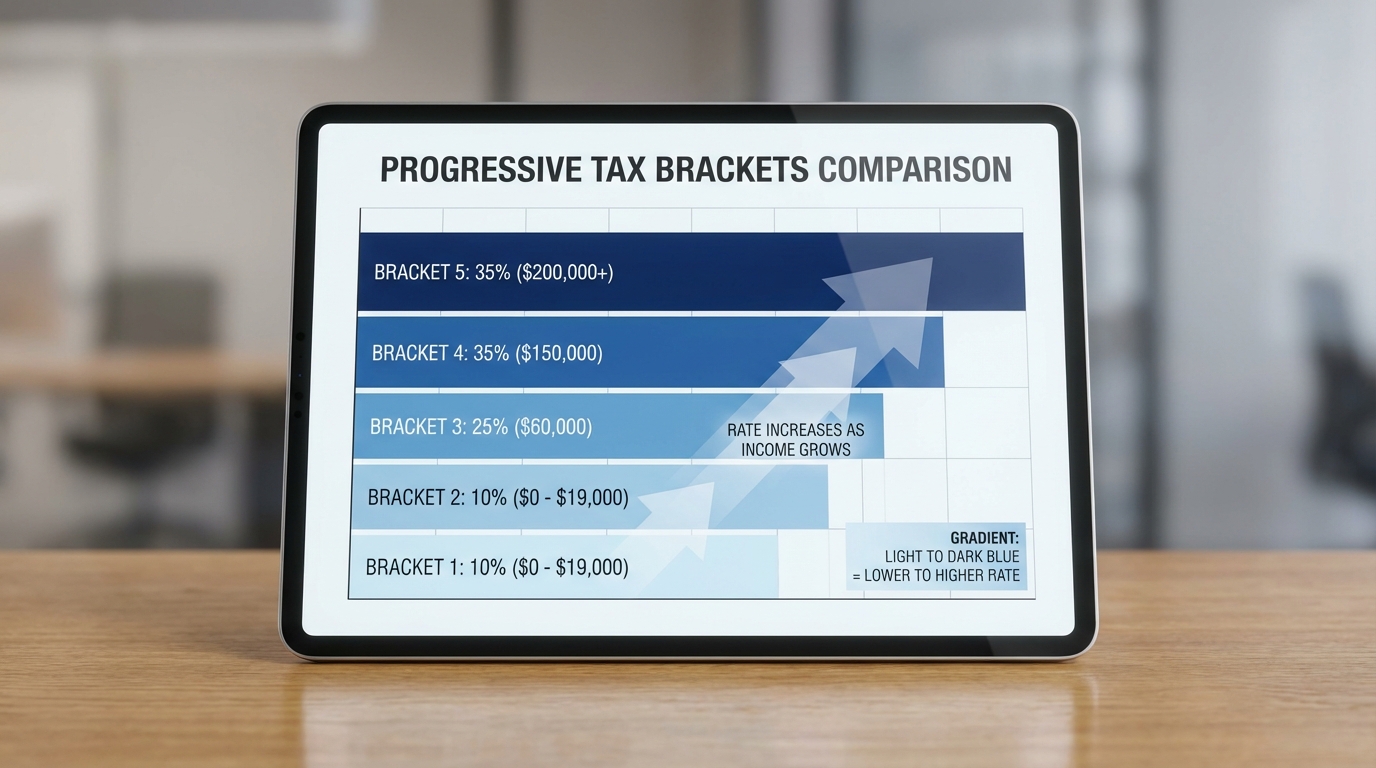
For 2026, the standard deduction rises to $16,100 for single filers and $32,200 for married couples filing jointly. Understanding where you fall within the tax bracket structure is essential for calculating your optimal conversion amount.
According to Kiplinger’s Roth conversion guide, the key is to identify how much “room” you have before jumping into the next tax bracket, then converting up to that threshold.
Six Compelling Reasons to Convert to Roth in 2026

1. Lock in Today’s Tax Rates
Current tax brackets are historically favorable, but there’s no guarantee they’ll remain this way. With rising federal debt and deficit levels, many financial experts anticipate higher tax rates in the future. Converting now locks in current rates and provides tax-free growth and withdrawals later when rates may be significantly higher.
2. Eliminate Required Minimum Distributions (RMDs)
Traditional IRAs force you to take RMDs starting at age 73 (as updated by SECURE 2.0). These mandatory withdrawals increase your taxable income whether you need the money or not. Roth IRAs have no RMDs during the original owner’s lifetime, giving you complete control over when and how much you withdraw.
This flexibility helps you manage your tax bracket in retirement, potentially avoiding Medicare IRMAA surcharges and reducing taxes on Social Security benefits.
3. Tax-Free Growth Potential
Once you’ve paid the conversion tax, every dollar of growth in your Roth IRA is completely tax-free. Over decades, this can result in hundreds of thousands of dollars in tax savings. The earlier you convert, the more time your money has to compound tax-free.
4. Strategic Conversions During Market Downturns
Converting when your IRA balance is temporarily depressed due to market volatility allows you to pay tax on a smaller valuation. When markets recover—as they historically do—all that growth happens tax-free in your Roth. This strategy, sometimes called “conversion arbitrage,” can significantly enhance long-term returns.
5. Reduce Future Medicare Costs
High retirement income triggers Medicare IRMAA surcharges, which can add hundreds or thousands of dollars annually to your Medicare Part B and Part D premiums. Because Roth withdrawals don’t count as income, strategic conversions today can help you avoid these surcharges in retirement.
6. Create Tax-Free Legacy for Heirs
Beneficiaries who inherit Roth IRAs receive tax-free distributions (though they must empty the account within 10 years under SECURE Act rules). This makes Roth conversions an excellent estate planning tool, allowing you to pay the tax now at your rate and pass tax-free wealth to the next generation.
Calculating Your Optimal Conversion Amount

The art of Roth conversion planning lies in determining exactly how much to convert. Financial planners typically use a “fill the bracket” strategy—converting just enough to reach the top of your current tax bracket without spilling into the next higher bracket.
The “Fill the Bracket” Strategy Example
Let’s say you’re a married couple filing jointly with $100,800 in income for 2026. You’re at the top of the 12% bracket. The 22% bracket starts at $100,800 and extends to $211,400. This means you could convert $110,600 and pay only 22% tax on the conversion, rather than jumping to 24% (which starts at $211,400).
For couples aged 65 and older, the enhanced standard deduction and senior deduction create even more conversion space within lower brackets.
Zero-Tax Roth Conversion Strategy
In certain scenarios, you can execute a Roth conversion while paying zero federal income tax. This works when your total taxable income—including the conversion amount—remains below the threshold where long-term capital gains are taxed at 0%.
For 2026, married couples filing jointly can have up to $98,900 in taxable income and still qualify for the 0% long-term capital gains rate. According to MarketWatch’s analysis, this creates opportunities for strategic conversions that generate no federal tax liability when properly structured.
SECURE 2.0 Changes Affecting Roth Strategies

The SECURE 2.0 Act introduces several provisions that impact Roth conversion planning for 2026 and beyond.
Mandatory Roth Catch-Up for High Earners
Starting in 2026, employees with FICA wages over $150,000 in the prior year must make catch-up contributions to their 401(k) plans as Roth (after-tax) contributions. While this rule applies to workplace plans rather than IRAs, it effectively forces high earners into Roth-style saving for catch-up amounts.
According to the IRS final regulations issued in September 2025, this requirement takes full effect for contributions in tax years beginning after December 31, 2026.
Enhanced Catch-Up Contributions
For 2026, workers aged 50+ can make catch-up contributions of $8,000 to their 401(k) plans, on top of the base limit of $24,000. Workers aged 60-63 get an even larger catch-up allowance of $11,250.
These higher limits create more opportunity to build tax-deferred or Roth savings, depending on your strategy.
When NOT to Convert: Avoiding Common Roth Mistakes
While Roth conversions offer compelling benefits, they’re not appropriate for everyone. Here are scenarios where converting might not make sense:
You’ll Need the Money Within 5 Years
Roth conversions are subject to a 5-year aging rule. If you withdraw converted funds (specifically, the principal amount you converted) before five years have passed, you’ll owe a 10% early withdrawal penalty if you’re under age 59½. The conversion makes less sense if you need short-term access to the funds.
You’re Already in a High Tax Bracket
If you’re currently in the 32%, 35%, or 37% federal tax bracket, the conversion tax bite can be severe. In this case, it may make more sense to wait until retirement when you’re likely in a lower bracket—or convert smaller amounts gradually over multiple years to stay within lower brackets.
You Can’t Pay the Tax with Outside Funds
The conversion works best when you pay the resulting tax bill with cash from non-retirement accounts. If you have to pull money from the IRA itself to cover taxes, you’re reducing the amount that can grow tax-free in the Roth, significantly diminishing the strategy’s benefit.
You’re Close to Medicare or ACA Subsidy Thresholds
Large conversions increase your MAGI for the year, potentially triggering Affordable Care Act subsidy clawbacks or Medicare IRMAA surcharges two years later (Medicare looks back two years when calculating IRMAA).
Practical Roth Conversion Strategies for 2026
The Multi-Year Approach
Rather than converting your entire traditional IRA in one year (and facing a massive tax bill), consider spreading conversions over multiple years. This “bracket management” approach keeps you in lower tax brackets each year while steadily building your Roth balance.
Convert During Low-Income Years
Years when you have unusually low income—perhaps between retiring and claiming Social Security, or a year with significant business losses—present excellent conversion opportunities. You can fill up the lower brackets with conversions at minimal tax cost.
Coordinate with Charitable Giving
If you’re charitably inclined and over age 70½, consider using Qualified Charitable Distributions (QCDs) from your IRA to satisfy charitable goals while converting other IRA assets to Roth. QCDs reduce your taxable income, creating more room for conversions within lower brackets.
Step-by-Step: Executing Your 2026 Roth Conversion

Step 1: Project Your 2026 Income
Calculate your expected income from all sources (wages, Social Security, investment income, RMDs if applicable). This establishes your baseline tax bracket.
Step 2: Determine Your Conversion Capacity
Identify how much room you have before jumping into the next tax bracket. Factor in the enhanced senior deduction if you’re 65+.
Step 3: Consider State Taxes
Don’t forget state income taxes. Some states don’t tax retirement income, while others tax it fully. Factor this into your conversion calculations.
Step 4: Execute the Conversion
Contact your IRA custodian and request a Roth conversion for the amount you’ve determined. Most brokerages can complete this process online or over the phone in minutes.
Step 5: Pay the Tax
You can either increase your withholding from other income sources or make estimated tax payments to cover the conversion tax. Don’t wait until April 15 to pay—you may owe underpayment penalties.
Step 6: Document Everything
Keep detailed records of your conversion, including Form 1099-R from your IRA custodian and Form 5498 showing the Roth contribution.
Frequently Asked Questions About Roth Conversions in 2026
Can I undo a Roth conversion if I change my mind?
No. The Tax Cuts and Jobs Act of 2017 eliminated the ability to “recharacterize” (undo) Roth conversions. Once you convert, the decision is permanent. This makes careful planning even more critical.
How does a Roth conversion affect my Social Security benefits?
The conversion increases your income for the year, which could increase the portion of your Social Security benefits subject to taxation (up to 85% of benefits can be taxable). However, future Roth withdrawals don’t count as income and won’t affect Social Security taxation in retirement.
Can I convert just part of my traditional IRA?
Absolutely. You can convert any amount you choose, from a few hundred dollars to the entire balance. Many people do partial conversions annually as part of a multi-year strategy.
What if I have both deductible and non-deductible contributions in my traditional IRA?
The IRS uses the “pro-rata rule,” meaning each conversion includes a proportional mix of pre-tax and after-tax money based on your total IRA balance. You can’t selectively convert only the non-deductible (already-taxed) portion.
Do I need to convert before a certain age?
There’s no age limit for conversions. However, converting earlier gives your money more time to grow tax-free in the Roth. Many financial planners recommend completing conversions before age 70-73, when RMDs begin and increase your taxable income.
How do Roth conversions interact with the new SALT deduction limits?
Converting to Roth increases your income, but it doesn’t affect your ability to claim the SALT deduction (up to $40,000 for 2025-2028). However, very large conversions could push you into the SALT deduction phase-out range ($500,000-$600,000 MAGI), so coordinate carefully.
Will a Roth conversion trigger the 3.8% Net Investment Income Tax?
Possibly. The Net Investment Income Tax (NIIT) applies to investment income when your MAGI exceeds $200,000 (single) or $250,000 (married filing jointly). Because a conversion increases your MAGI, it could trigger or increase your NIIT liability for that year. This is another reason to carefully calculate conversion amounts.
The Bottom Line: Is a 2026 Roth Conversion Right for You?
Roth IRA conversions in 2026 offer exceptional opportunities for tax-savvy retirement savers, particularly those in their early 60s who can take advantage of enhanced senior deductions and strategic bracket positioning. The combination of favorable tax legislation, increased standard deductions, and the ongoing SECURE 2.0 implementation creates a unique window for building tax-free retirement wealth.
The key is to approach conversions strategically—calculating your optimal amount, spreading conversions over multiple years if necessary, and coordinating with other aspects of your financial plan. For most people, this means working with a qualified tax advisor or financial planner who can model different scenarios and identify your sweet spot.
Remember that Roth conversions are irreversible decisions with immediate tax consequences. Take time to run the numbers, consider your long-term tax projections, and ensure you have cash on hand to pay the conversion tax without depleting the retirement account itself.
Done correctly, a Roth conversion in 2026 can save you tens or even hundreds of thousands of dollars in taxes over your lifetime while providing valuable flexibility in retirement. The question isn’t whether to convert—it’s how much and when to maximize the benefit.