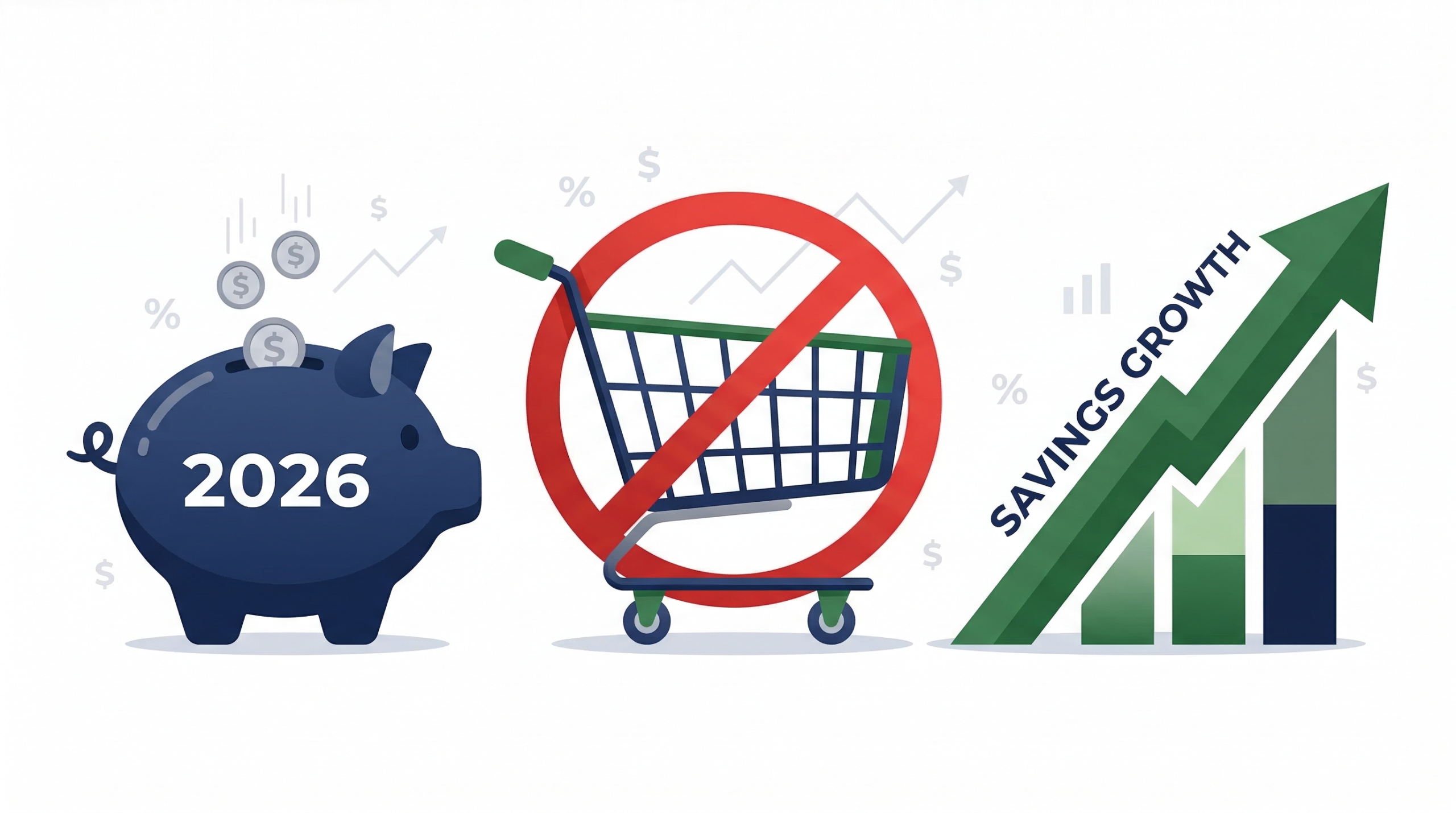
Discover how over 70,000 Americans are using the No Buy 2026 challenge to break free from impulse spending and save thousands this year.
If you’re tired of wondering where your money went each month, you’re not alone. The average American now spends $3,381 annually on impulse purchases—nearly $282 every month disappearing on unplanned buys. But a powerful movement is changing how people think about spending in 2026.
The No Buy 2026 challenge has exploded in popularity, with over 70,000 members in dedicated online communities sharing their success stories. Participants are saving thousands, paying off debt, and fundamentally transforming their relationship with money. This isn’t about deprivation—it’s about intentionality.
In this comprehensive guide, you’ll learn exactly how to implement the No Buy 2026 challenge, customize the rules to fit your life, and join the growing movement of people taking control of their finances in an era of persistent inflation and economic uncertainty.
What Is the No Buy 2026 Challenge?
The No Buy 2026 challenge is a personal finance movement where individuals commit to avoiding non-essential purchases for a set period—ranging from 30 days to the entire year. Unlike extreme frugality, this approach is customizable and sustainable.
How It Works
Participants create two lists: a “buy” list for essentials and a “no buy” list for discretionary items. Essentials typically include:
- Groceries and household necessities
- Rent or mortgage payments
- Utilities and bills
- Transportation costs (gas, car payments)
- Prescription medications and essential healthcare
The “no buy” list varies by person but commonly includes:
- New clothing and accessories
- Home decor and furniture
- Electronics and gadgets
- Restaurant meals and takeout
- Beauty products and cosmetics
- Entertainment subscriptions
- Hobby supplies and impulse Amazon purchases
As Rebecca Sowden, a digital creator who completed a no-buy year in 2025, explains: “No-spend challenges are a good mental reset for putting a hard stop on overconsumption and prove to yourself you can say ‘no.'”
Why the No Buy Challenge Is Trending in 2026
The timing isn’t coincidental. Economic pressures and changing consumer behaviors have created perfect conditions for this movement to flourish.
Rising Financial Stress
According to Intuit’s 2026 Financial Wellness survey, 61% of Americans identify money as their primary life stressor, with 53% reporting increased financial stress over the past year. Despite these challenges, 93% plan to make changes to how they manage money in 2026.
The YouGov 2026 consumer spending trends report reveals that 53% of Americans have set a budget for 2026, up from 46% in 2025—showing growing awareness of the need for financial discipline.
The Impulse Spending Problem
Recent data highlights the scale of the impulse buying crisis:
- 84-89% of U.S. adults have made an impulse purchase at some point
- The average American makes nearly 10 impulse purchases per month
- 54% of adults made at least one unplanned purchase during the 2025 holiday season
- One in five adults spent over $1,000 on a single impulse buy
- 52% of women and 46% of men regret at least one impulsive purchase
According to Capital One Shopping’s 2025 impulse buying statistics, these spontaneous purchases add up to $3,381 annually for the average consumer—money that could instead go toward debt repayment, emergency savings, or investments.
Social Media’s Role
The challenge has gained massive traction on TikTok and Instagram, where creators document their journeys and share tips. Rebecca Sowden’s detailed no-buy plan garnered 2.6 million views, while the Reddit community r/nobuy has grown to over 70,000 members sharing accountability and strategies.
A 2025 survey found that 52% of Gen Z is actively looking for ways to “opt out” of the economy by spending less overall, with 62% receiving financial advice from social media.
Real Success Stories: People Saving Thousands
Elysia Berman’s Breaking Point
Elysia Berman’s story illustrates how quickly impulse spending spirals out of control. She ducked into a store to buy gloves and emerged with a $600 coat she couldn’t afford. “That was my breaking point,” she says. After implementing a no-buy challenge, she transformed her finances and now helps others do the same.
Geoffrey’s 65% Savings Rate
Geoffrey was living paycheck-to-paycheck before trying a no-buy year, despite being the higher earner in his relationship. After the challenge, he was saving 65% of his take-home pay. The difference wasn’t earning more—it was stopping the constant bleed of small, unnecessary purchases.
Rebecca Sowden’s Closet Revelation
When Rebecca Sowden looked at her savings account and then at her closet, she realized: “My closet is absolutely bursting at the seams,” but her retirement and savings were basically empty. Her no-buy year helped her redirect thousands toward actual financial security instead of accumulating items with tags still on them.
Debt Payoff Success
One woman in the r/nobuy community paid off $35,000 in debt within a year and a half using the no-buy method. By eliminating discretionary spending and redirecting that money to debt repayment, she achieved in 18 months what would have taken a decade with minimum payments.
10 Warning Signs You Need the No Buy Challenge
How do you know if the No Buy 2026 challenge is right for you? Look for these red flags:
1. You’re Buying 10+ Items Per Week
If you’re ordering something Monday, picking up a few things Tuesday, browsing online Wednesday, and making additional purchases Thursday and Friday, shopping has become a weekly habit rather than intentional behavior. Challenge participants often discover they were buying more in a month than most people buy in a year.
2. You Make Impulse Purchases You Can’t Afford
Going to Target for shampoo and spending $127. Browsing Amazon for phone cases and somehow buying a coffee machine. If these impulse purchases are going on credit cards you can’t pay off, you’re spending money you don’t have on things you don’t need.
3. Your Closets Are “Bursting at the Seams”
Open your closet right now. How many items still have tags on them? How many things did you buy and never wear? If you can barely fit your clothes in your closet but you’re still shopping for more, you don’t have a clothing shortage—you have a spending problem.
4. You Shop for Emotional Reasons
Shopping gives some people a temporary high. They spend to feel better when stressed, sad, bored, or anxious. Had a tough day at work? Time to browse online. The problem is that shopping only makes you feel better for about five minutes. Then you’re back where you started, except now you have less money and more stuff.
5. You’re Living Paycheck to Paycheck Despite Good Income
This might be the biggest warning sign. You make decent money—maybe even good money—but every month you’re broke by the time the next paycheck arrives. Your friends think you’re doing well financially because you always have new stuff, but behind the scenes, you’re stressed about money constantly.
6. You Have Multiple Unpaid Subscriptions
Streaming services you never use, monthly boxes you forgot about, app subscriptions charging automatically. These recurring charges add up to hundreds annually without providing proportional value.
7. You Browse Shopping Apps When Bored
If your default response to boredom is opening Amazon, TikTok Shop, or Instagram shopping, you’ve developed a behavioral pattern that leads directly to impulse purchases.
8. Your Credit Card Balance Never Decreases
You make minimum payments but never get ahead. The interest keeps piling up while your home fills with stuff you forgot you bought.
9. You Can’t Remember Your Last Purchase-Free Week
When was the last time you went seven consecutive days without buying anything non-essential? If you can’t remember, the no-buy challenge will provide valuable perspective.
10. You Feel Guilty After Shopping
If shopping regularly leaves you feeling guilty, anxious, or regretful rather than satisfied, it’s time to examine your relationship with spending.
How to Start Your No Buy 2026 Challenge
Ready to begin? Here’s a step-by-step framework for success:
Step 1: Audit Your Finances
Before starting, take a good look at your credit card bills and checking account statements from the past 90 days. “Crunching the numbers, at least for one month of expenses, is eye-opening,” says NYC lifestyle creator Chiara Lucia, who cut her credit card bill almost in half through no-spend challenges. “You can see where your money actually goes.”
Identify patterns: Are you repeatedly spending on workday coffee runs, excessive dinners out, or online shopping? This audit becomes your baseline for improvement.
Step 2: Create Your No-Buy Rules
The spending parameters you set should be unique to your situation. No one knows your spending habits and pitfalls better than you.
Sample No-Buy Rules:
- No new clothing or accessories for 90 days
- No restaurants or takeout except once per week
- No Amazon or online shopping except for household necessities
- No beauty products until current supplies are depleted
- No home decor or furniture purchases
- Unsubscribe from all marketing emails
- Delete shopping apps from your phone
Be honest about what you absolutely need versus what’s nice to have. As financial planner Hanna Kaufman notes: “Challenges work because they give you structure with a finish line. You’re not saying ‘no’ forever, just ‘not now.'”
Step 3: Set a Specific Savings Goal
Having an end goal makes it easier to stick to the challenge. Imagine what you hope to accomplish:
- Pay off your $5,000 credit card balance
- Save $3,000 for an emergency fund
- Build a $10,000 down payment fund
- Contribute $6,500 to your IRA
- Pay off $2,000 in student loans
Knowing your “why” helps you avoid veering off track when things get difficult.
Step 4: Find Free Joy
Just because you’re avoiding spending money doesn’t mean you have to deprive yourself. Kaufman suggests: “Replace shopping habits with low-cost (or no-cost) fun: picnics, hikes, library runs, or finally watching that streaming series you’ve ignored.”
Other free or low-cost alternatives:
- Host potluck dinners instead of restaurant outings
- Visit museums on free admission days
- Start a hobby using supplies you already own
- Exercise outdoors or with free YouTube videos
- Organize game nights with friends
Step 5: Track Your Progress
According to lifestyle creator Tatyiana Gordon: “Invest in a money notebook—or start a spreadsheet—where you document each expense. It gives you a different sense of your money habits; you can see every dollar you’re spending and compare it to every dollar you’re bringing in.”
Gordon saved $2,000 after seeing her savings in small increments throughout the month. Watching your savings increase over time serves as constant motivation.
Step 6: Implement Behavioral Rules
Rebecca Sowden says her first attempts at no-buy challenges failed until she added “behavioral rules.” These included:
- No browsing online stores “just to look”
- No shopping without a list
- No going to the mall for fun
- Unsubscribing from all marketing emails
- Deleting retailer apps from her phone
- No entering Target unless she needed one specific item
“Focus on changing behavior, not just pausing it,” Sowden advises. “While on your no-buy, find alternative hobbies or activities to solve the problem of boredom; that way, when your challenge is over, you are more equipped to not immediately backslide into old habits.”
Common Challenges and How to Overcome Them
The First Week Is the Hardest
Tatyiana Gordon notes that the first week can be the most difficult. Your brain is accustomed to the dopamine hit from shopping. Combat this by:
- Keeping your savings goal visible
- Joining an online accountability community
- Using the 30-day rule for any potential purchases
- Reminding yourself why you started
Social Pressure to Spend
Friends may not understand your challenge. Prepare responses like:
- “I’m saving for a specific goal right now, but I’d love to hang out!”
- “Let’s do a potluck or free activity instead.”
- “I’m doing a No Buy challenge through [date]—want to join me?”
Legitimate Needs Arise
Sometimes you genuinely need something. Be flexible: if your winter coat is falling apart and you live in a cold climate, that’s a legitimate need. The key is distinguishing between “I need this” and “I want this.”
Feeling Deprived
If the challenge feels too extreme, scale back. Try a “low buy” approach instead of “no buy.” Limit discretionary spending to $50 or $100 per month rather than eliminating it entirely. As Kaufman notes: “Being flexible makes you feel less deprived and more motivated to stick to your plan.”
The 30-Day List: An Alternative Approach
If a full no-buy challenge feels overwhelming, try the 30-day list method that’s trending alongside No Buy 2026:
How it works: When there’s something non-essential you want to buy, add it to your 30-day list with the date and price. Come back in 30 days and decide if you still want it as badly.
Why it works: This creates a cooling-off period that eliminates impulse purchases while still allowing intentional buys. Most items on the list will lose their appeal within 30 days.
Tips for success:
- Keep the list accessible (Notes app or physical list on fridge)
- Include the price to see the cumulative total
- Use your online shopping cart as a temporary holding place
- Review the list weekly to see patterns in your desires
Financial Statistics That Make the Case
The numbers behind impulse spending are staggering:
Annual Impact
- Average annual impulse spending: $3,381
- Impulse purchases that prompted regret: 48-52%
- Americans who spent $100+ on an impulse buy: 54%
- Americans who spent $1,000+ on an impulse buy: 20%
Social Media’s Influence
- Gen Z driven to impulse buy by social media ads: 60%
- Millennials who bought something seen on social media: 61%
- Annual spending on social media impulse buys: $754 average
- TikTok users who make impulse buys on the app: 55%
Demographic Breakdown
- Millennials who regularly purchase on impulse: 74%
- Gen X who buy impulsively: 69%
- Gen Z who frequently or occasionally make impulsive purchases: 63%
- Baby Boomers who make impulsive purchases: 53%
Source: Capital One Shopping 2025, Bankrate/Yahoo Finance 2025 survey, YouGov 2026 consumer trends
What Happens After the Challenge Ends?
The goal isn’t to maintain extreme restriction forever. As Hanna Kaufman explains, the challenge creates “structure with a finish line” that helps break longstanding habits.
Post-Challenge Best Practices:
- Keep your behavioral rules: Continue not browsing stores for fun, unsubscribing from marketing emails, and shopping only with a list.
- Implement the 30-day rule: For any non-essential purchase over $50, wait 30 days before buying.
- Track spending monthly: Continue documenting expenses to maintain awareness.
- Set ongoing savings goals: Redirect the money you were saving during the challenge to continue building wealth.
- Allow intentional indulgences: Budget for occasional treats so you don’t feel deprived and relapse.
FAQ: Your No Buy 2026 Questions Answered
Q: Can I buy groceries during a no-buy challenge?
A: Absolutely. Groceries are considered essential expenses. The no-buy challenge targets discretionary spending, not necessities. You should continue buying food, household supplies, and anything required for basic living. Some people even use the challenge as an opportunity to reduce food waste by eating what they already have before buying more.
Q: What if I need to replace something that breaks?
A: Legitimate replacements for broken essentials are allowed. If your refrigerator stops working, your only pair of shoes falls apart, or your car needs repairs, these are necessary expenses. The key is distinguishing between “I need this to function” and “I want this because it’s new or upgraded.” When in doubt, ask yourself: “Could I reasonably continue without this for 30 days?”
Q: How long should my first no-buy challenge be?
A: Start with what feels manageable. Many beginners start with a 30-day challenge or even a “no-spend week.” Tatyiana Gordon recommends: “If you’re going from someone who is frivolously spending all day, every day, it would be a complete change to not spend a single dime. Set rules for yourself.” You can always extend the challenge once you build momentum. Some people do quarterly challenges (90 days), while others commit to the full year.
Q: What about gifts for birthdays and holidays?
A: This depends on your rules. Some people include gifts on their no-buy list, opting for homemade gifts, experiences, or items they already own (regifting unused items). Others budget a specific amount for gifts (e.g., $25 per person). The key is planning ahead rather than last-minute panicked purchases. Remember: most people value thoughtfulness over price tags.
Q: Can I still eat out with friends?
A: This is one of the most common questions. The answer depends on your goals and rules. Some people allow one restaurant meal per week or month. Others suggest alternatives like hosting potlucks, having coffee at home, or meeting for free activities like hikes. If maintaining social connections is important to you (and it should be), build reasonable allowances into your challenge rather than setting yourself up for isolation and failure.
Q: How much money can I realistically save?
A: Savings vary dramatically based on your spending habits. The average American spends $3,381 annually on impulse purchases, so a year-long challenge could theoretically save that amount. However, real-world results range from $500 to $15,000+ depending on:
- Your baseline spending habits
- Challenge duration (30 days vs. full year)
- How strict your rules are
- Whether you redirect savings toward debt (which compounds through interest savings)
Many participants report saving $200-500 per month, which adds up to $2,400-6,000 annually.
Q: What if I fail and make a purchase?
A: Don’t abandon the entire challenge. One mistake doesn’t erase your progress. Acknowledge what happened, understand the trigger, and continue. As Rebecca Sowden notes, her first attempts failed until she added behavioral rules. Learn from the slip-up and adjust your approach. Some people even build a “mistake allowance” into their challenge (e.g., three gets per quarter).
Conclusion: Your Path to Financial Control Starts Now
The No Buy 2026 challenge isn’t about punishment or deprivation—it’s about reclaiming control over your money and your life. With the average American spending over $3,000 annually on impulse purchases, even modest changes can yield thousands in savings.
Whether you commit to 30 days, 90 days, or the full year, the principles remain the same: intentional spending, behavioral changes, and clear goals. The 70,000+ members of no-buy communities prove this approach works across income levels and lifestyles.
Your Action Steps:
- Audit your spending from the past 90 days to identify patterns
- Create your no-buy rules based on your specific weaknesses
- Set a concrete savings goal that motivates you
- Choose your timeline (start with 30 days if you’re new)
- Find accountability through friends or online communities
- Track your progress daily or weekly
- Celebrate milestones as you hit savings targets
Remember Geoffrey’s story: he went from paycheck-to-paycheck to saving 65% of his income without earning more money. The difference was stopping the constant drain of unnecessary spending.
2026 is your year to break the cycle. Start your No Buy challenge today, and join the thousands of Americans discovering that financial freedom comes not from earning more, but from spending intentionally.
Ready to start? Write down your no-buy rules tonight, set your savings goal, and begin tomorrow. Your future self will thank you.
External Resources:
- Fidelity: 4 Money Trends to Watch in 2026
- Intuit: 2026 Financial Forecast – Staying Mindful Amid Money Stress
- GOBankingRates: 6 Smart Ways Families Can Beat Inflation in 2026
- Yahoo Finance: How the ‘No Buy 2026’ Trend Could Help You Get Your Budget on Track
- Building Your 2026 Budget: A Practical Guide to Success