Retirement Readiness Checklist for Your 50s
Your 50s are a powerful decade for retirement planning. You still have time to make meaningful changes, but retirement is close enough that vague goals stop being useful. At this stage, the question is no longer just, “Am I saving?” A better question is, “Can my future income, savings, healthcare plan, tax strategy, and debt picture support the life I actually expect to live?”
This retirement readiness checklist is designed for people in their 50s who want a clear, practical way to organize the next phase. It is general education, not personalized financial, tax, legal, or investment advice. Your best strategy depends on your income, savings, health, family situation, risk tolerance, location, and retirement timeline.
The goal is not to create a perfect plan in one sitting. The goal is to replace uncertainty with a working roadmap.
1. Estimate Your Retirement Spending Before You Estimate Your Retirement Number
Many people start with a single retirement savings target, such as one million dollars. That can be motivating, but it can also be misleading. A retirement number only matters in relation to your spending, income sources, taxes, healthcare costs, and time horizon.
Start by estimating your retirement spending in three buckets:
- Essential expenses: housing, food, utilities, insurance, transportation, healthcare, taxes, and minimum debt payments.
- Lifestyle expenses: travel, hobbies, gifts, dining out, home projects, and family support.
- Irregular expenses: car replacement, home repairs, medical surprises, insurance deductibles, and major purchases.
Do not assume retirement spending automatically drops. Some work expenses may fall, but healthcare, travel, home maintenance, and family support can rise. A realistic retirement budget is better than an optimistic one that breaks under pressure.
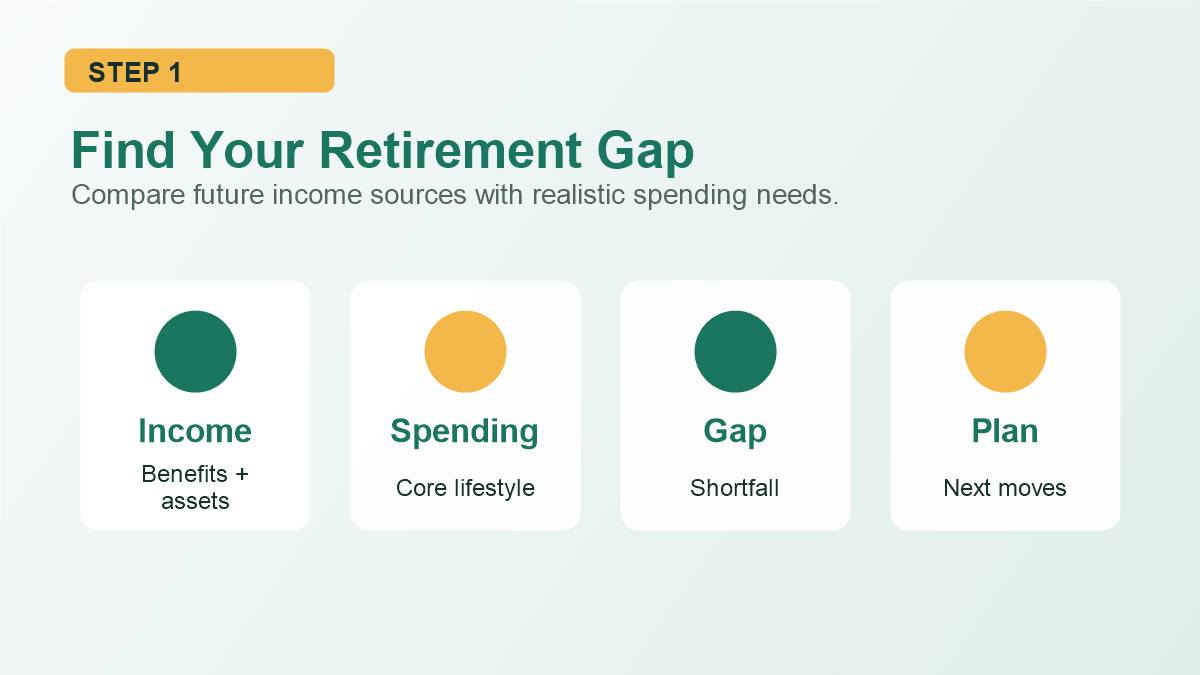
2. List Every Future Income Source
Retirement income usually comes from several places. Your job in your 50s is to understand each source, when it starts, how reliable it is, and how it may be taxed.
Common sources include:
- Social Security
- 401(k), 403(b), or similar workplace plans
- Traditional IRAs
- Roth IRAs
- Pensions
- Brokerage accounts
- Cash savings
- Part-time work or business income
- Rental income
For Social Security, use your official account at SSA.gov to review your earnings record and benefit estimates. The Social Security Administration also explains that claiming age affects monthly benefits. Claiming early can reduce benefits, while delaying can increase them up to age 70. That does not mean everyone should delay, but it does mean the claiming decision deserves careful planning.
3. Build a Retirement Paycheck Strategy
Saving for retirement is one skill. Turning savings into monthly income is another. In your 50s, start thinking about how your future retirement paycheck could work.
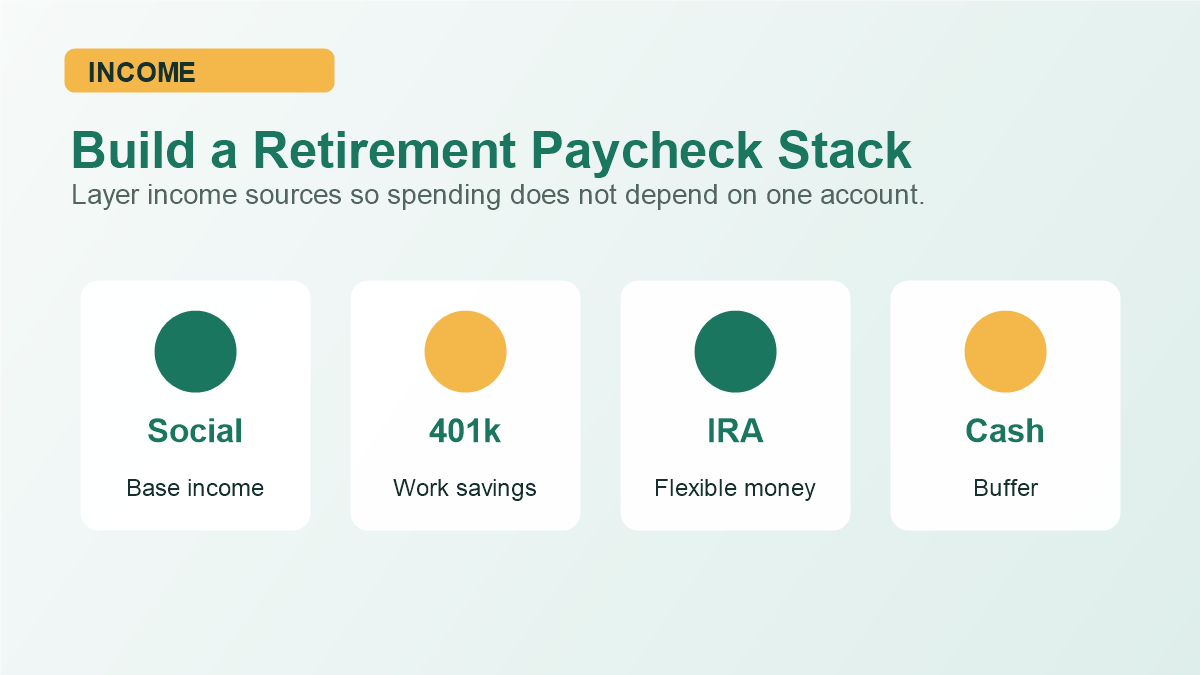
A simple retirement paycheck stack might include:
- Social Security for baseline income
- Pension income if available
- Withdrawals from tax-deferred accounts
- Tax-free Roth withdrawals where appropriate
- Cash reserves for short-term spending
- Taxable brokerage withdrawals for flexibility
Your strategy should answer three questions: which accounts will you use first, how much will you withdraw, and what will you do during market downturns? If you cannot answer those questions yet, that is not failure. It is your planning list.
4. Check Whether You Are Saving Enough Now
Your 50s may include peak earning years, which makes them valuable for catch-up planning. Review your current savings rate and ask whether it matches your retirement timeline. If you are behind, small tweaks may not be enough. You may need a combination of higher savings, lower future spending, later retirement, part-time work, or a different housing plan.
Use the retirement calculators at Investor.gov as a starting point. Calculators are not perfect, but they can help you see whether your current path is roughly on track or needs adjustment.
5. Reduce Debt Before Retirement
Debt is not automatically bad, but it can reduce flexibility in retirement. A mortgage, car loan, credit card balance, personal loan, or parent student loan can all compete with healthcare, travel, taxes, and daily living expenses.
Make a debt inventory with balances, interest rates, monthly payments, and payoff dates. Then decide which debts need to be gone before retirement and which may be manageable. High-interest debt deserves special attention because it can drain cash flow quickly.
If your retirement plan only works when every payment goes perfectly, it may be too fragile.
6. Plan for Healthcare Before Medicare
Medicare generally starts at age 65, but many people want to retire before then. If you leave work before Medicare eligibility, you need a healthcare bridge. That could mean a spouse’s plan, COBRA, marketplace coverage, retiree health benefits, or another option.
Healthcare can be one of the biggest retirement wild cards. Premiums, deductibles, prescriptions, dental care, vision care, and long-term care needs can all affect the budget. Do not treat healthcare as a footnote.
7. Understand Required Minimum Distributions
Required minimum distributions, or RMDs, are mandatory withdrawals from certain retirement accounts once you reach the applicable age. The IRS RMD resource explains the rules for retirement plan participants and IRA owners. RMDs matter because they can affect taxable income, Medicare premiums, and the timing of withdrawals.
You do not need to solve every RMD question in your 50s. But you should know whether most of your savings are in tax-deferred accounts, Roth accounts, taxable accounts, or cash. That mix affects future tax flexibility.
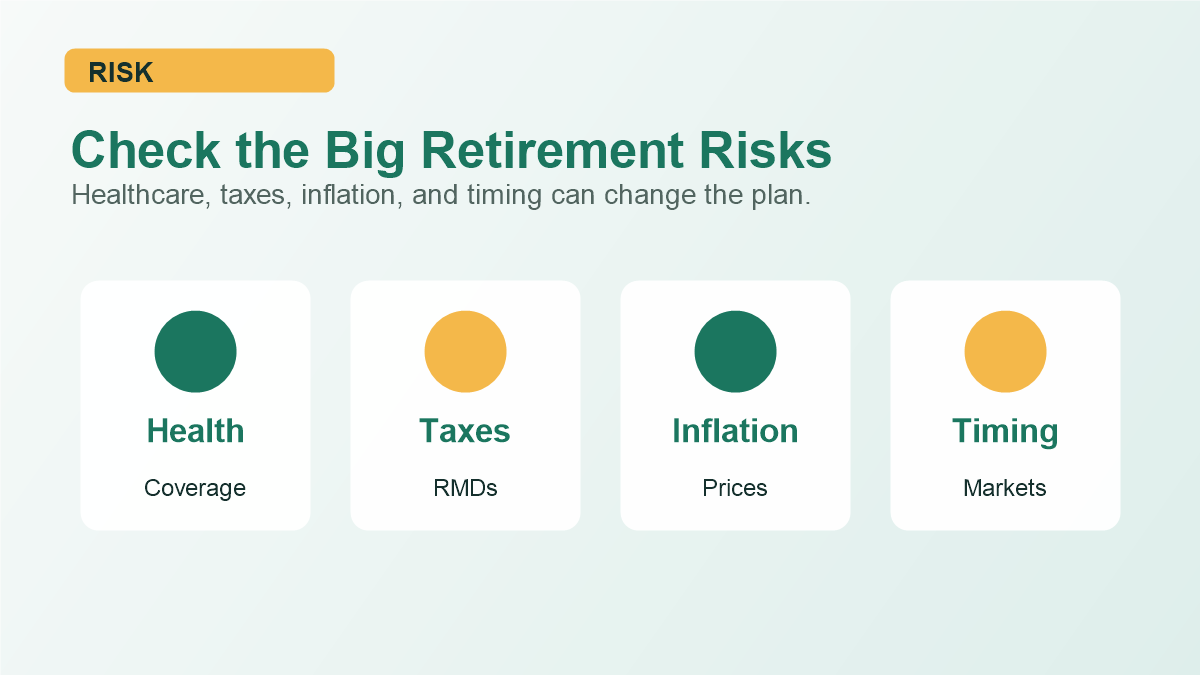
8. Review Your Investment Risk
The right investment mix in your 50s is personal. You still may need growth for a retirement that could last decades, but you also have less time to recover from major mistakes. Review your allocation across stocks, bonds, cash, and other assets. Ask whether your portfolio still matches your timeline and comfort with volatility.
A common mistake is either taking too much risk because retirement feels underfunded or taking too little risk because market swings feel uncomfortable. Both can create problems. The right balance should support both near-term stability and long-term purchasing power.
9. Build a Cash Buffer
A cash buffer can protect your retirement plan from bad timing. If the market drops early in retirement, having cash available may reduce the need to sell investments at an unfavorable time. Cash can also cover emergencies, insurance deductibles, travel deposits, home repairs, and medical bills.
If you recently read our guide on building an emergency fund on a tight budget, the same principle applies here. Cash is not meant to earn the highest return. It is meant to keep the plan steady when life gets inconvenient.
10. Decide What Retirement Actually Means
Retirement is not one single lifestyle. Some people stop working completely. Others consult, work part time, start a small business, volunteer, care for family, travel, downsize, or relocate. Your financial plan should match the life you are actually trying to build.
Write down your preferred retirement age, backup retirement age, expected location, work plans, travel goals, family obligations, and health assumptions. This turns retirement from a vague dream into a planning scenario.
11. Update Estate and Beneficiary Information
Your 50s are a good time to review beneficiaries on retirement accounts, insurance policies, bank accounts, and brokerage accounts. Beneficiary designations can override your will, so they need to be current.
Also consider whether your will, powers of attorney, healthcare directives, and account access plans are up to date. This is especially important after marriage, divorce, remarriage, the birth of children or grandchildren, or the death of a loved one.
12. Create a Five-Year Action Plan
A retirement checklist becomes useful when it turns into action. For the next five years, choose specific moves:
- Increase retirement contributions by a set percentage.
- Pay off one high-interest debt.
- Estimate Social Security benefits at different claiming ages.
- Price healthcare if retiring before 65.
- Build or rebuild a cash reserve.
- Review investment allocation once per year.
- Update beneficiaries and estate documents.
- Run a retirement projection annually.
For deeper retirement income planning, read our guide on retirement income strategies. If you use Roth accounts, the Roth IRA guide on maximizing your Roth IRA can help you think through tax flexibility.
FAQ: Retirement Readiness in Your 50s
Is it too late to start retirement planning in your 50s?
No. Your 50s still give you time to increase savings, reduce debt, clarify Social Security timing, adjust investments, and build a more realistic retirement income plan. The key is to act with numbers instead of guesses.
What is the most important retirement move in your 50s?
The most important move is understanding your gap: expected retirement income compared with realistic spending. Once you know the gap, you can decide whether to save more, work longer, reduce expenses, change investments, or adjust retirement expectations.
Should I pay off my mortgage before retirement?
It depends on your cash flow, interest rate, savings, taxes, and comfort with debt. Paying off a mortgage can reduce monthly pressure, but using too much cash can reduce flexibility. Compare both scenarios before deciding.
When should I claim Social Security?
There is no single best age for everyone. Claiming age affects monthly benefits, but the right choice depends on health, income needs, spouse benefits, work plans, taxes, and longevity assumptions. Review your official SSA estimates before deciding.
How often should I review my retirement plan?
In your 50s, review it at least once a year and after major life changes. Retirement planning is not a one-time calculation. It is a living plan that should adjust as income, markets, health, family needs, and goals change.
Final Takeaway
Your 50s are not the time to panic about retirement. They are the time to get specific. Estimate spending, list income sources, check your savings rate, reduce debt pressure, plan healthcare, understand taxes, and build a retirement paycheck strategy.
The best retirement plan is not the one that looks perfect on paper. It is the one that gives you enough flexibility to handle real life.