
How to Budget for Home Maintenance Without Getting Blindsided
A mortgage payment is predictable. A failed water heater, a leaking gutter, or an air conditioner that quits during a heat wave is not. That mismatch is why a home can feel affordable on closing day and unexpectedly expensive a year later.
A home maintenance budget gives those irregular costs a place in your plan before they become a credit-card emergency. It is not a promise that every repair will cost the same amount each year. It is a system for noticing what your house needs, saving steadily, and making better decisions when an expense arrives.
This guide shows you how to build that system. You will choose a realistic starting target, separate routine upkeep from true surprises, turn an annual number into a monthly transfer, and adjust the plan for the age and condition of your home. The goal is not a perfect prediction. The goal is fewer financial shocks.
Start with the right definition of “home maintenance”
Homeownership has several costs that are easy to blur together. Your principal, interest, taxes, insurance, HOA dues, and utilities may all belong in a housing budget, but they are not the same as maintenance. A maintenance budget is for the care, repairs, and eventual replacement of things you own and are responsible for maintaining.
Routine examples include gutter cleaning, HVAC service, caulk, weatherstripping, pest prevention, yard drainage, and small plumbing fixes. Larger examples include repairing a roof leak, replacing a water heater, fixing a furnace, or addressing a failing appliance. Cosmetic upgrades are different: a kitchen remodel or patio you simply want should have its own savings goal, so it does not drain money needed to keep the house safe and functional.
The Consumer Financial Protection Bureau specifically advises buyers to budget for maintenance and repairs in addition to the monthly mortgage payment and other property costs. That is a useful mindset even if you have owned your home for years: housing affordability is about the whole system, not just the loan.
Choose a starting target, then personalize it
A common rule of thumb is to save 1% to 4% of a home’s value each year for maintenance, repairs, and replacements. Fannie Mae presents this as a planning range, with newer homes often nearer the low end and older homes potentially needing a larger reserve. Treat it as a starting point, not a price quote. A high-value home on expensive land might not need 4% of its value for upkeep, while a modest but aging house with a roof near the end of its life may need more than a simple percentage suggests.
Begin with the range, then make it more real using four questions:
- How old is the home? Older homes may have more systems nearing replacement and more unknowns behind walls, under floors, or in the yard.
- What is the condition of the major systems? A five-year-old roof and a twenty-year-old roof do not call for the same savings pace.
- Where do you live? Climate, trees, drainage, freeze-thaw cycles, humidity, wildfire exposure, and coastal conditions change both upkeep and risk.
- What can you safely do yourself? DIY ability can reduce small labor bills, but it should never become a reason to delay licensed or safety-critical work.
For example, a homeowner with a $350,000 newer home might start with 1%, or $3,500 per year. That is about $292 per month. A buyer of an older home with several aging systems might choose a higher starting target while also making separate near-term plans for known replacements. The exact number matters less than making a conscious decision and revisiting it.
Make a home inventory before you decide how much to save
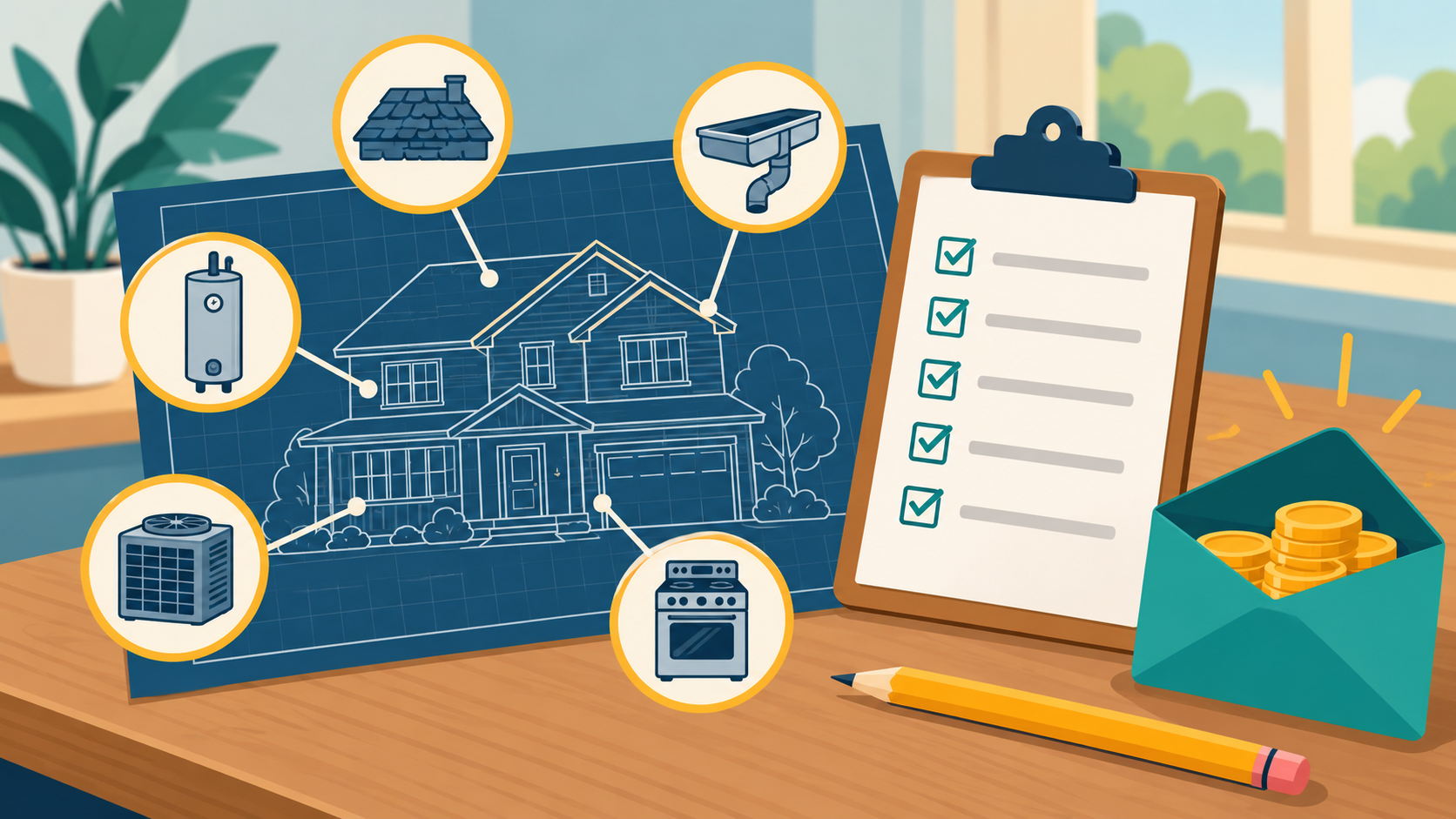
Percentages are helpful, but a home inventory makes your budget personal. Walk through the property with a notes app or spreadsheet. List the major systems, their approximate age, their last service date, their warranty status, and any warning signs. If you received inspection reports when you bought the house, start there. Keep manuals, contractor invoices, and photos in one folder.
Include the roof; gutters and drainage; exterior paint or siding; windows and doors; heating and cooling; water heater; plumbing supply lines; electrical panel; appliances; foundation or crawl space; driveway and walkways; fencing; trees; and any special features such as a well, septic system, fireplace, pool, or solar equipment. You do not need to diagnose each item yourself. You are creating a map of future decisions.
Next, sort every item into three buckets:
- Recurring maintenance: work likely to happen this year, such as a tune-up, filter changes, gutter cleaning, or seasonal landscaping.
- Known future replacements: a roof, appliance, or HVAC unit that is functioning but approaching the end of its useful life.
- Unknown repairs: the leaks, storm damage, plumbing issues, and other surprises you cannot schedule.
This is also a good time to read our guide to the hidden costs of buying a house. It helps separate the costs of owning from the upfront cash you need to close. If you are still shopping, compare the full carrying cost of each property before you fall in love with its asking price.
Use two savings buckets instead of one vague “house fund”
One account is better than no plan, but two buckets make the tradeoffs clearer. The first bucket is a maintenance sinking fund for predictable work and known replacements. The second is your emergency fund for true surprises, including urgent home repairs that cannot wait.
A sinking fund is money set aside gradually for a future expense. If you know the water heater is old, it is not really a surprise when it fails; it is a future expense with an uncertain date. Saving for it separately protects your broader emergency cash. If you are new to the approach, this sinking-fund guide explains the math and account setup in more detail.
Do not drain every dollar of emergency savings into a home-maintenance account. Life can bring a job loss, medical bill, car repair, and plumbing problem in the same year. A well-funded emergency fund gives you flexibility when the unexpected happens. Your maintenance fund reduces how often you have to use it.
Turn your annual target into a monthly automatic transfer
Once you have a target, divide it by 12 and automate the result shortly after payday. Automation matters because home expenses are irregular, while paychecks are usually regular. A monthly transfer lets you use predictable cash flow to prepare for unpredictable timing.
Suppose you choose a $4,800 annual maintenance target. That is $400 a month. You could direct $250 into general maintenance and $150 toward one known future replacement. If $400 is not realistic today, begin with $100 or $150 and raise it after a debt payoff, raise, or annual budget review. A small automatic contribution is more durable than an ambitious plan that disappears after two months.
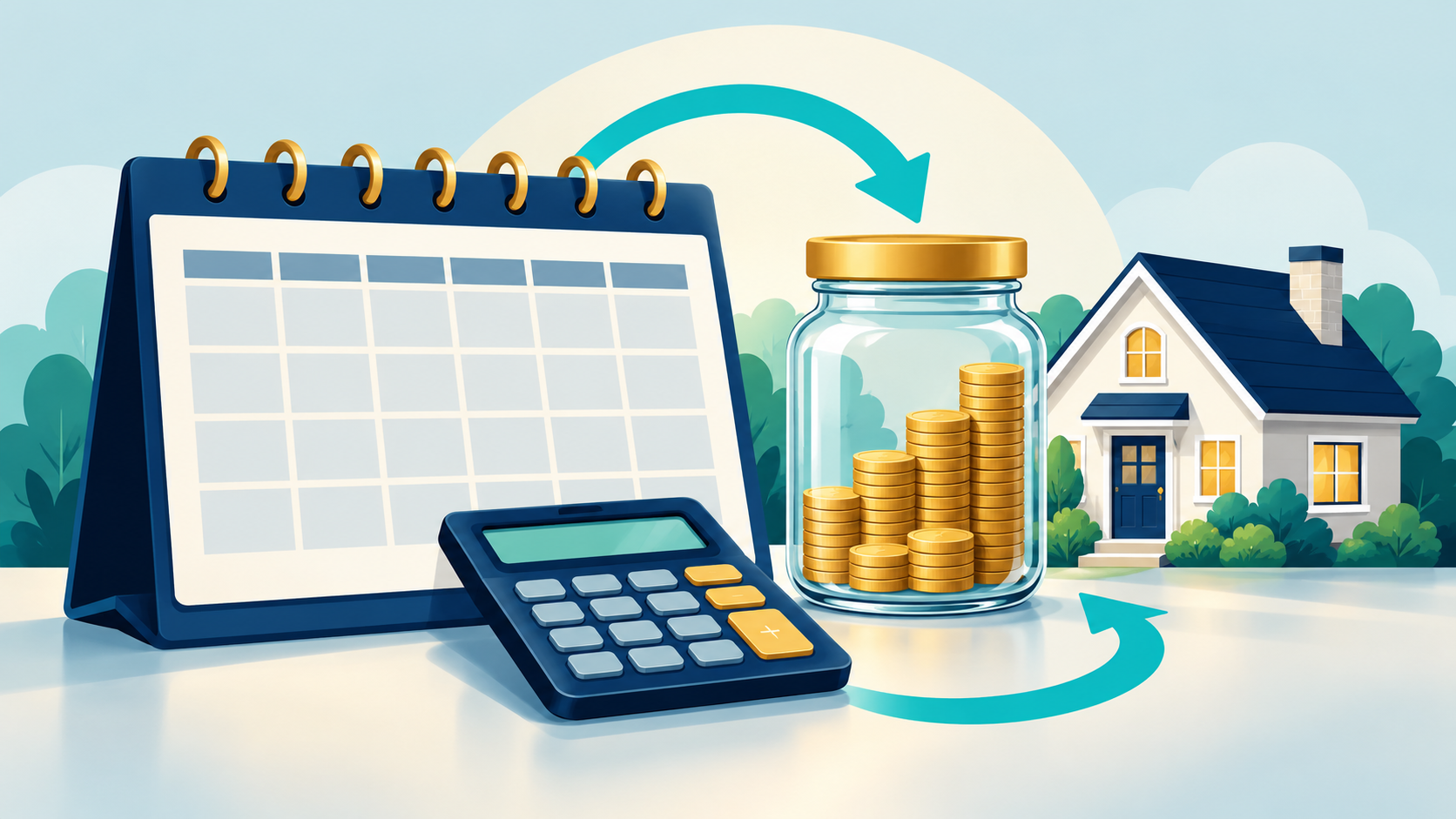
Keep the money accessible and low risk. A separate high-yield savings account can make the purpose visible while earning some interest, but the priority is availability, not investment return. Avoid placing money needed in the next few years into volatile investments; a market drop should not determine whether you can repair a leak.
Build a replacement schedule for the expensive stuff
For large, foreseeable costs, work backward. Get a current estimate when possible, add room for price changes, and divide by the number of months until you reasonably expect to need the work. The schedule will not be exact, but it converts a scary lump sum into a decision you can act on.
| Item | What to track | Planning question |
|---|---|---|
| Roof | Age, material, inspection notes, leaks | How many years might remain, and what would a replacement cost locally? |
| HVAC | Age, service history, performance changes | Would a repair buy useful time, or should you save for replacement? |
| Water heater | Age, type, corrosion, leak signs | What will replacement and installation cost if it fails sooner than expected? |
| Exterior and drainage | Paint, caulk, gutters, grading, tree growth | Which small jobs prevent water from becoming a costly problem? |
| Appliances | Age, warranty, repair history | Is replacement a maintenance need or a discretionary upgrade? |
Do not confuse useful-life estimates with deadlines. A system may last longer or fail earlier. The purpose is to avoid acting as if an aging system will last forever. When a contractor identifies a safety issue, water intrusion, electrical concern, or structural problem, get appropriate professional advice rather than postponing the decision to preserve the budget.
Put preventive maintenance on a seasonal calendar
Some of the best money-saving maintenance is boring. Cleaning gutters, replacing filters, correcting drainage, and catching a small leak early can prevent a modest task from growing into water damage or a system failure. The work needed depends on your location and home, but a seasonal rhythm keeps it visible.
Spring
Look for winter damage, test exterior drainage, inspect caulk and weatherstripping, service cooling equipment if appropriate, and clean gutters after local conditions call for it. Walk the property after a hard rain to see where water actually goes.
Summer
Watch for cooling problems, trim vegetation away from the house where appropriate, check decks and exterior surfaces, and monitor irrigation for leaks. In hot climates, pay attention to airflow and equipment performance before the busiest repair season.
Fall
Prepare for rain, wind, or cold. Clear gutters if needed, inspect the roof from the ground, service heating equipment according to manufacturer guidance, and address drafts or exposed pipes. This is also a good time to review whether your annual savings target still fits the home’s condition.
Winter
Protect plumbing in freezing weather, watch for ice or moisture issues, and pay attention to unusual heating costs or cold rooms. After storms, document damage promptly and understand what your insurance policy requires before making a claim.

Know when an expense belongs somewhere else
Not every house-related expense should come from the maintenance budget. Insurance premiums, property taxes, and HOA dues are recurring housing costs; include them in your regular monthly budget. A remodel that adds features or changes a room for preference is a goal expense. Damage from a covered event may involve insurance, although deductibles and coverage details vary. Read the policy and talk with your insurer before assuming a loss is covered.
Likewise, do not treat a mortgage refinance or closing cost as maintenance. If you are deciding whether a loan change is worth it, start with the loan terms and closing figures. How to Compare Mortgage Loan Estimates can help you evaluate those numbers without mixing them into the repair budget.
What to do when the fund is not big enough
Sometimes a repair arrives before the savings do. First, triage: safety, active water intrusion, heat or cooling in dangerous conditions, and essential plumbing or electrical problems take priority over cosmetic work. Ask for written scopes of work and compare qualified contractors when time permits. A cheaper quote is not automatically a better quote; confirm what materials, permits, warranties, cleanup, and follow-up are included.
Then decide which bucket should absorb the cost. Use the maintenance fund for planned or ordinary upkeep. Use emergency savings for urgent surprises. If you must borrow, understand the full repayment cost and avoid turning a manageable repair into years of high-interest debt. Afterward, rebuild the fund with a temporary spending adjustment or a planned transfer increase. A depleted fund is not evidence that the system failed; it is often evidence that it did its job.
Look for small recurring savings that can refill the account. Our guide on practical ways to save money can help you find room without relying on an unrealistic overnight overhaul.
Review your plan once a year—and after every major repair
Set a calendar reminder for an annual home-finance review. Update the inventory, enter what you actually spent, keep contractor invoices, and note what surprised you. If a repair was covered by your savings, replenish the balance. If a system is aging faster than expected, increase the relevant sinking fund. If several quiet years leave you with more cash than you need for near-term maintenance, do not rush to spend it; future replacements are still coming.
This review is also a useful complement to your broader financial plan. A home should not crowd out retirement contributions, insurance needs, debt repayment, or other priorities. A realistic maintenance line keeps the house in proportion to the rest of your money life.
FAQ
How much should I save each month for home maintenance?
Start with an annual target based on your home’s value, age, condition, and local climate, then divide by 12. The 1% to 4% range is a useful rule of thumb, but your inventory and known replacement needs should shape the final number.
Should home repairs come from my emergency fund?
Urgent, unplanned repairs can be a legitimate use of emergency savings. A separate maintenance sinking fund is still valuable because it covers expected upkeep and reduces pressure on emergency cash.
Is a home warranty the same as a maintenance fund?
No. Coverage, exclusions, service fees, and claim outcomes vary. Even with a warranty, you may need cash for uncovered repairs, maintenance requirements, deductibles or service fees, and work that must happen quickly.
The bottom line
A home maintenance budget is less about predicting the next broken thing than building the habit of preparing for ownership. Inventory the house, save automatically, separate planned replacements from true emergencies, and revisit the plan as the home changes. That gives you more choices when something needs attention—and more confidence that a repair will not derail every other goal.
Sources and further reading
- Fannie Mae: How to Build Your Maintenance and Repair Budget
- Consumer Financial Protection Bureau: Figure Out How Much You Want to Spend
- U.S. Census Bureau: Cost of Improving and Maintaining Older Homes
This article is for general educational purposes and is not personalized financial, insurance, legal, or home-repair advice. For safety, structural, electrical, plumbing, or insurance questions, consult an appropriately qualified professional.