How to Make Estimated Tax Payments: A Simple Quarterly System
When income arrives without taxes already taken out, the money in your account is not all yours to spend. Freelance projects, a growing side business, rental income, interest, dividends, and a big investment sale can all create a tax bill that does not wait until next April. Estimated tax payments are the pay-as-you-go tool that helps you cover that bill during the year.
The phrase “quarterly taxes” makes the process sound more mysterious than it is. You are not filing four mini tax returns. You are making reasonable payments toward the federal income and self-employment taxes you expect to owe, then reconciling everything on your annual return. A good system has five parts: identify income that lacks withholding, choose a defensible target, set money aside as you earn it, pay on the right schedule, and update the plan when your year changes.
This guide explains that system for U.S. individual taxpayers. It is general education, not individual tax, legal, or investment advice. Rules differ for some situations, including farming, fishing, nonresident returns, and state taxes. When your income is complex or a major transaction is involved, use the current IRS instructions and a qualified tax professional.
What estimated taxes are—and what they are not
The United States generally expects income tax to be paid as income is earned or received. An employer usually handles that through payroll withholding. When there is no employer withholding—or not enough of it—you may make estimated payments instead. The IRS says estimated tax can cover income tax, self-employment tax, and other amounts reported on your return.
These payments are not a separate kind of tax and they are not a subscription fee for working for yourself. They are prepayments credited on your annual Form 1040. If you overpay, the excess may become a refund or be applied to a future year. If you underpay, you can still pay the remaining balance when you file, but you may owe an underpayment penalty depending on the timing and amount paid during the year.
This distinction matters because it changes the goal. Do not aim to guess your final tax bill perfectly in January. Aim to make a reasonable plan, keep current records, and revise the plan as your actual income becomes clearer. That is more realistic for a freelancer with uneven invoices, an investor with a one-time gain, or a household whose income changes midyear.
Who should pause and check whether payments are needed?
Start with the source of the money. Common examples include self-employment and gig work, consulting, interest and dividends, taxable benefits without voluntary withholding, rent, partnership income, and gains from selling investments. A job plus a side hustle can require attention too: payroll withholding from the job may cover some or all of the extra tax, but do not assume it does.
For many individual taxpayers, the IRS’s general test is a useful first screen. You may need estimated payments if you expect to owe at least $1,000 for the year after subtracting withholding and refundable credits, and you expect withholding and credits to be below the applicable safe-harbor amount. The current Form 1040-ES instructions and IRS estimated-tax FAQ spell out the rules, including important exceptions.
Before reaching for a calculator, collect a few facts: last year’s completed federal return, year-to-date income and expense records, current payroll withholding, and any expected changes. If you are a sole proprietor, clean bookkeeping is especially valuable. Separate business activity from personal spending and use your records—not the current bank balance—as the starting point. The habits in our guide to starting freelancing can make this administrative work much easier from day one.

Understand the safe-harbor idea before choosing a number
Safe harbor is a guardrail, not a promise that you will owe no tax at filing. In broad terms, individual taxpayers can often avoid a federal underpayment penalty if timely payments through withholding and estimates equal at least 90% of the current year’s tax or 100% of the prior year’s tax, whichever is smaller. The prior-year threshold is generally 110% instead when prior-year adjusted gross income exceeded $150,000, or $75,000 if married filing separately. Your prior-year return generally must have covered 12 months.
Those rules are useful because the prior-year approach can give you a known target while your current income is unpredictable. But they do not replace tax planning. A fast-growing business could still leave you with a large balance due even if you avoid a penalty. And a major drop in income might mean paying based on last year is unnecessarily cash-heavy. Read the current Form 1040-ES instructions rather than relying on an old blog post or memory.
There is also a practical alternative worth knowing: increase withholding from wages or certain retirement income if that fits your household. Withholding is generally treated as paid evenly throughout the year for penalty calculations, while estimated payments are tied to their actual payment dates. That does not make withholding universally better, but it can simplify a mixed-income household. Our tax document checklist can help you keep the prior return, payment confirmations, and year-to-date documents in one place.
Build a working estimate in four passes
You do not need a perfect forecast to create a useful plan. The IRS worksheet in Form 1040-ES is the authoritative calculation tool; tax software or a preparer can also help. Use this straightforward workflow to prepare the information it needs.
- Forecast taxable income. Start with income already received, then add a cautious estimate for the rest of the year. For a service business, use signed work, recurring clients, and a conservative assumption for leads. For investments, distinguish regular dividends and interest from a possible one-time sale.
- Estimate deductible expenses and adjustments. Track ordinary, necessary business expenses as they happen rather than inventing a percentage at payment time. Consider deductions, credits, and retirement contributions only when you have a reasonable basis for them.
- Estimate total federal tax. The worksheet walks through income tax, self-employment tax when applicable, credits, and withholding. Last year’s return is a helpful map, but check current forms and rules.
- Subtract withholding and divide the remaining target. What remains is the amount your estimated-payment plan needs to cover. If income is roughly even, equal installments may be practical. If it is seasonal, you may need a more tailored approach.
For example, imagine a designer with a salaried job and a new consulting practice. The designer should not set aside a percentage of gross consulting receipts and call it done. Instead, they can project net profit after documented business expenses, combine it with household income, estimate the total tax, subtract expected wage withholding, and then use the worksheet to decide whether estimates or an updated Form W-4 fit best. That turns a vague rule of thumb into a decision tied to the household’s real return.
Set money aside at the same time you receive untaxed income. A separate savings account or clearly labeled bucket can prevent the common mistake of treating a future tax obligation as available spending money. It also works well beside other irregular-expense goals; see how sinking funds work for a simple way to plan money with a known future job.
Know the payment rhythm
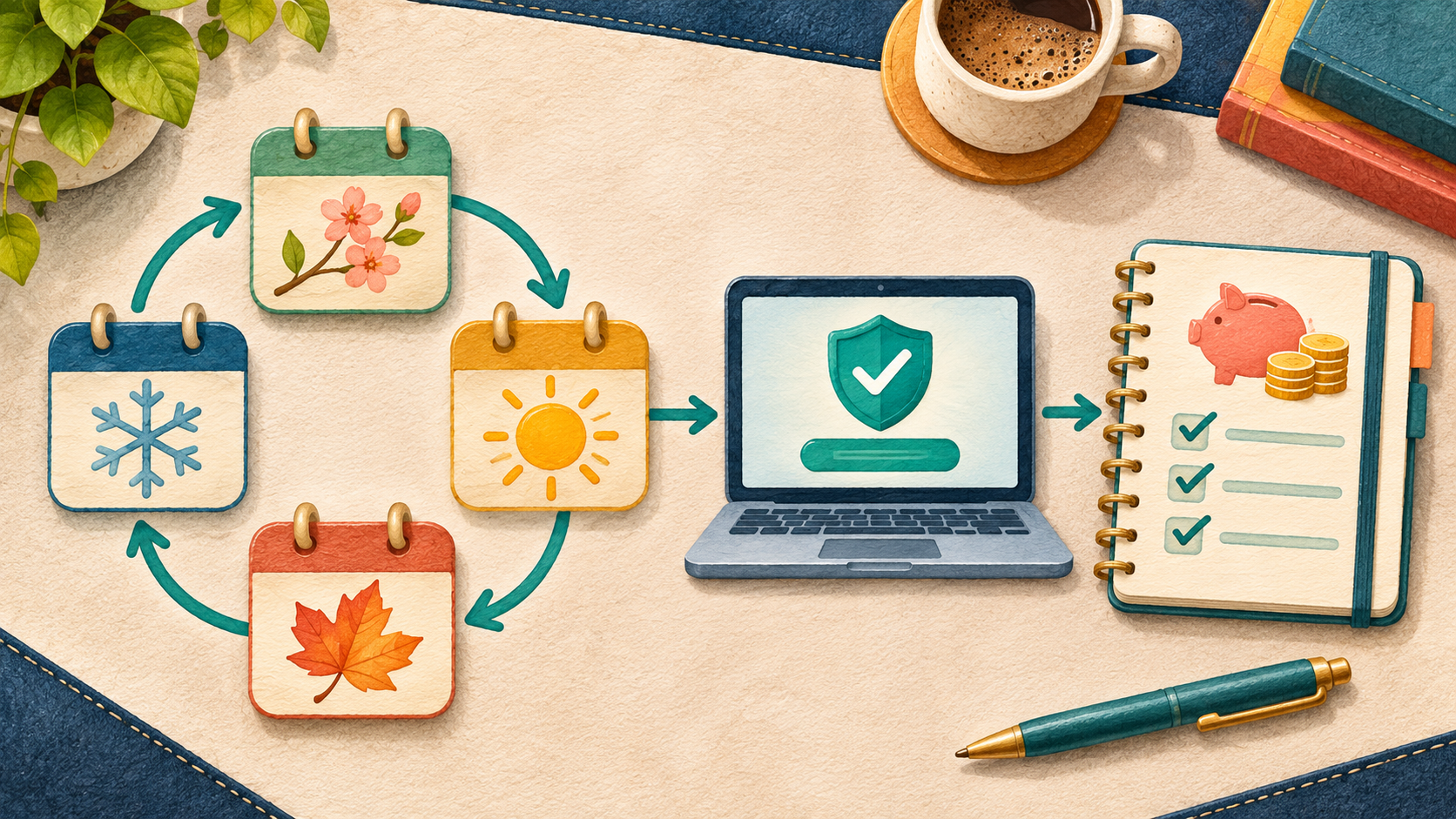
“Quarterly” is shorthand, not four equal three-month periods. The IRS divides the year into four payment periods, each with its own due date. The exact calendar date can shift when a weekend or holiday is involved, so confirm the dates in the current Form 1040-ES instructions or on the IRS estimated taxes page. Put every date on your calendar at the beginning of the year and add a reminder two weeks beforehand.
That reminder should trigger a short review, not an automatic payment you never reconsider. Update year-to-date revenue, expenses, withholding, and any big changes in expected income. If your forecast was too high or too low, the IRS specifically notes that you can complete another 1040-ES worksheet and refigure the next quarter. Revising is part of the process—not evidence that the original estimate failed.
Choose a payment method you can document
The IRS offers several payment methods. For many individuals, IRS Direct Pay lets you make an estimated-tax payment from a bank account at no cost. The IRS Direct Pay help page explains the types of payments it accepts and how to look up, change, or cancel a scheduled payment. Save the confirmation number immediately; it is your practical proof that the payment was scheduled or made.
An IRS Online Account can also show payment history and scheduled or pending payments. Current EFTPS users may have different options, but the IRS states that new individual taxpayers can no longer enroll in EFTPS; check its current EFTPS guidance before building a workflow around it. Payment by card can carry a processing fee, and a mailed check or money order needs the appropriate voucher and extra delivery time. Choose based on your situation and the latest IRS instructions, not convenience alone.
Make sure the payment is assigned to the correct tax year, form or payment type, and taxpayer information. A payment sent successfully but coded to the wrong purpose can create needless cleanup later. After payment, record the date, amount, method, confirmation number, and intended tax year in your tax folder. For a married couple, agree in advance whose account and identifying information will be used, especially if payments are being made from a shared checking account.
Federal payments are only one layer. Your state may have its own estimated-tax system, due dates, thresholds, and payment methods. Do not assume the federal schedule covers state obligations. Put both on the same calendar, use separate confirmation records, and ask a professional when you live or earn income in more than one state.
What to do when income is uneven
Uneven income is normal for a contractor, a commission-based worker, a landlord handling a repair, or an investor who sells assets late in the year. Equal payments can be simple, but simplicity is not always the best match for the facts. If most income comes later, paying a large amount only at the final deadline may not reflect when the income was earned. The annualized-income installment method may be relevant, and the current IRS materials explain it.
Here is the safe practical response: do a fresh projection after every meaningful change. A new client, profitable launch, realized gain, loss of a contract, change in spouse’s wages, or major deductible purchase can all justify a review. Update the forecast, compare payments and withholding already made with your new target, and decide how much of the adjustment belongs in the next payment. Do not wait for year-end simply because the original number was easy to remember.
For households with regular wages, an updated withholding election can sometimes be cleaner than juggling another payment stream. For people with only variable income, a recurring transfer to a tax reserve after each payment received may work better. The best system is the one that makes the tax money visible and hard to accidentally spend. It should also leave your emergency savings intact; estimated taxes are expected obligations, not an emergency. If the reserve is thin, prioritize rebuilding it using a plan like building an emergency fund on a tight budget.
Keep a small evidence file
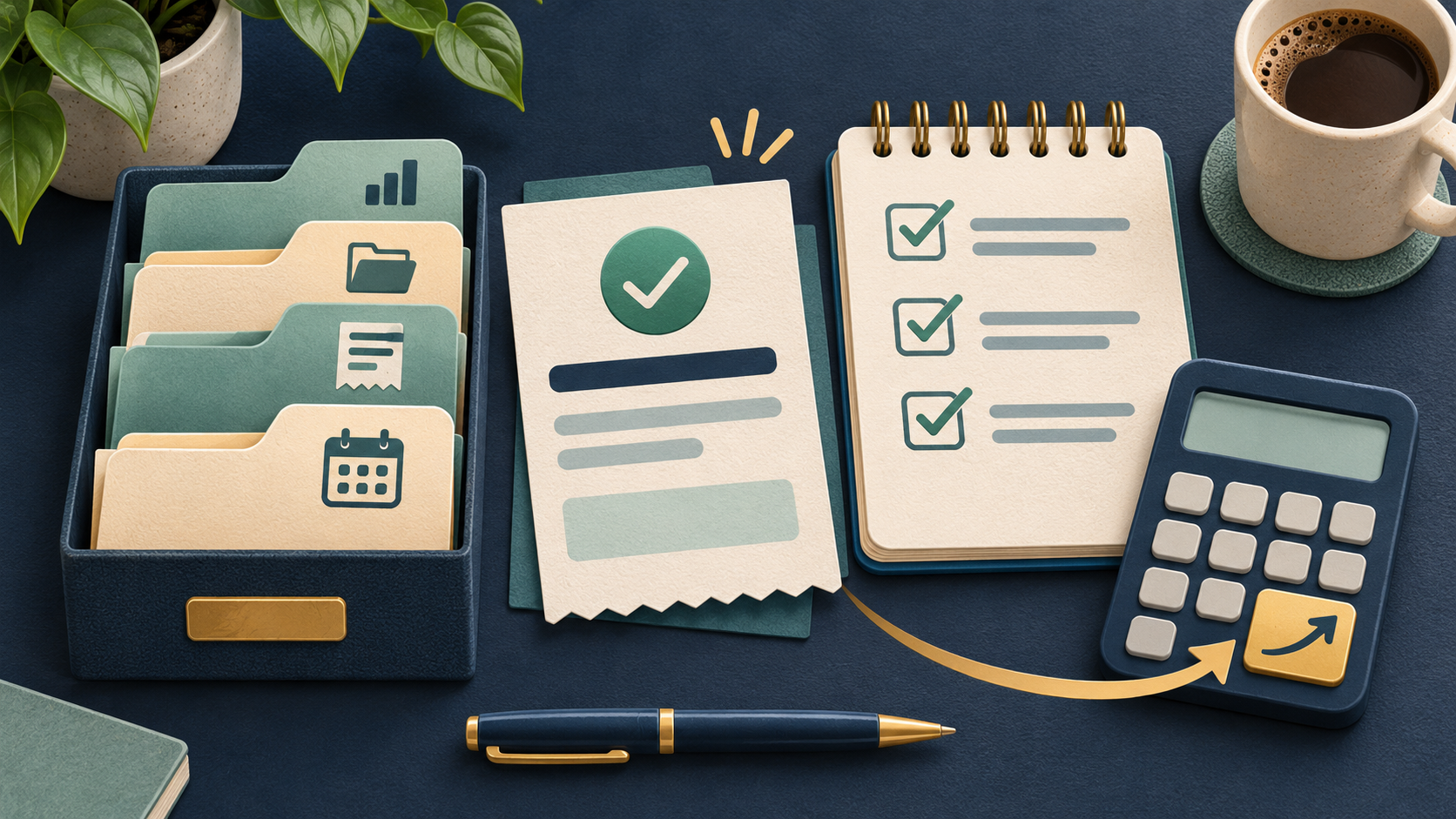
A good estimated-tax record takes minutes to maintain and can save hours at filing time. Make one digital folder for the tax year. Store each confirmation, bank debit record, worksheet version, invoice summary, and any note explaining a large change in income. Give files a consistent name such as “2026-06-15 federal estimate confirmation.” Keep an entry in a simple spreadsheet with payment date, amount, method, confirmation number, and state or federal designation.
At filing time, use the final list rather than relying on memory or a bank search. The payments are reported on the return as payments already made; tax software and preparers will ask for the amounts and dates. A tidy record also helps if you later need to verify a payment, correct an entry, or understand why this year’s plan differs from last year’s.
Common mistakes that make a manageable task expensive
Using gross income as the tax calculation. Gross receipts are not the same as taxable profit, but neither are they spendable cash. Keep income and documented expenses current, then use the official worksheet or professional help to estimate the actual return.
Forgetting withholding already in place. A household can accidentally over-reserve if it ignores wage withholding, or underpay if it assumes a paycheck covers a growing side business. Look at the whole return, not one income stream.
Making one catch-up payment and assuming timing does not matter. A refund at filing does not automatically erase an earlier underpayment issue. Payment timing is part of the calculation, so review the current rules before deciding how to catch up.
Ignoring a changed forecast. A quarterly system earns its name because you revisit it. Use each due date as a checkpoint.
Mixing up payment plans and estimated payments. An installment agreement addresses an existing balance due. It does not replace the need to address tax as new income arrives. If you cannot pay a bill in full, the IRS has payment-plan information, but seek help promptly rather than avoiding the notice.
A calmer way to manage tax all year
Estimated taxes become less stressful once they are treated as a routine cash-flow category. Start with your prior return, confirm the current-year rules, make a conservative forecast, reserve money as income lands, pay using a documented method, and recalculate whenever the year changes. You do not need to predict every dollar in January. You do need a habit of checking the plan before the calendar gets away from you.
Set a recurring calendar appointment now: review income, expenses, withholding, state obligations, and your tax reserve before each deadline. Pair it with your other financial maintenance—budget updates, sinking-fund transfers, and investment-account review. That rhythm keeps a future tax bill from becoming a surprise and gives you a clearer view of what your variable income can actually support. If variable income is helping fund a home, keep a separate plan for ownership costs as well; our guide to budgeting for home maintenance shows why expected obligations deserve their own category.